What Is Sparkl in Common Side Effects? A Grounded Guide to the Show’s Most Dangerous Product
If you watched the Common Side Effects Season 1 finale and came away asking, “Wait, what exactly is Sparkl?”, you are not alone. The show only spends a few minutes naming it on screen, but that brief moment sets up a huge part of the series’ future.
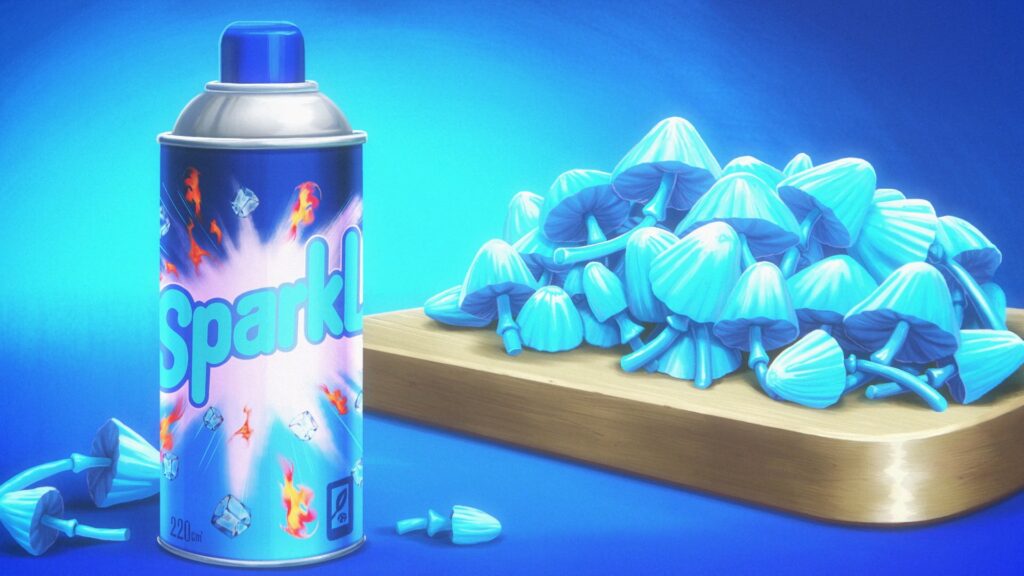
Sparkl is not just a throwaway gag or a random brand name. It is the corporate answer to the Blue Angel mushroom. It turns a secret healing fungus into a mass‑market product, and it pulls the show’s Big Pharma satire into much sharper focus.
Here is what Sparkl actually is, what the series and its creators have already told us about it, and what remains speculation as of November 2025.
First, a quick refresher on Common Side Effects and Blue Angel
Common Side Effects is an Adult Swim animated series created by Joe Bennett and Steve Hely. Season 1 aired from February 2 to March 30, 2025, with ten episodes in the first run. Adult Swim renewed the show for a second season on March 28, 2025, though no Season 2 air date has been announced yet.
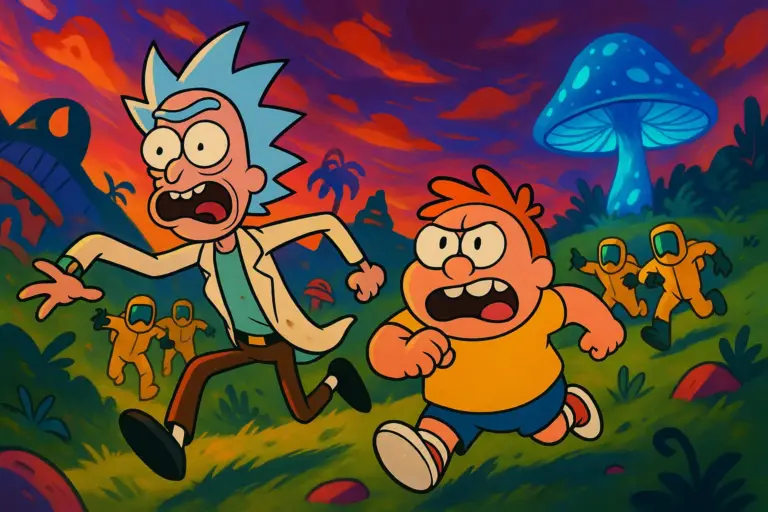
The show centers on Marshall Cuso and Frances Applewhite, former high‑school lab partners who reconnect after Marshall discovers the Blue Angel mushroom, a rare fungus that appears to cure almost any illness. Official descriptions and early reviews describe Blue Angel as a near‑universal cure, able to heal injuries and diseases that modern medicine cannot touch.
However, the fungus comes with a serious catch. Coverage of the series and fan explainers highlight a pattern of harsh side effects:
- Intense, often disturbing hallucinations and visions
- Fragmented memories and confusion about what is real
- Wild mood swings and episodes that resemble psychosis
- Extremely short sleep cycles and emotional instability
Commonsideeffects.tv recaps also note how these effects play out on screen. Jonas’s massive Blue Angel binge leaves him catatonic after grotesque hallucinations. Hildy experiments with a liquid form and even doses a city’s water tower, raising the stakes for everyone. The mushroom clearly heals, but it also destabilizes people in ways the characters struggle to control.
That unstable mix of miracle cure and mental hazard is the ground Sparkl grows from.
Sparkl’s origin: From raid fallout to “mushroom‑based food additive”
Sparkl enters the story at a specific, chaotic moment. The Season 1 finale, “Raid,” aired on March 30, 2025. In that episode, federal agents storm Marshall’s mushroom compound. The raid destroys most of the original Blue Angel stock and forces Marshall and Frances to rethink their entire approach.
Episode guides and detailed synopses line up on one key closing twist. In the aftermath of the raid:
- Reutical CEO Rick Kruger discovers a byproduct of the Blue Angel mushroom
- He formulates it as a derivative compound
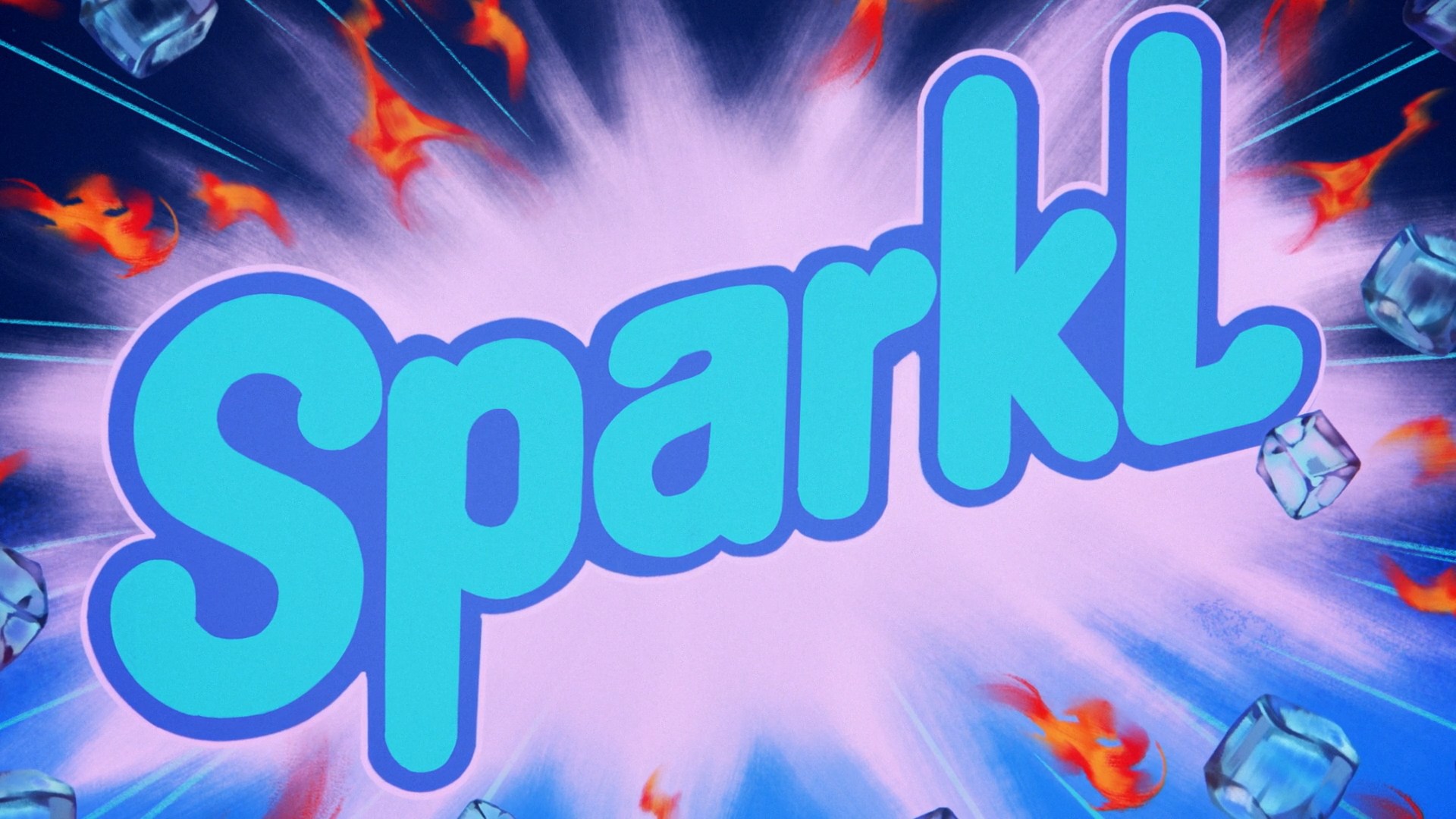
- He then markets it as “Sparkl,” a mushroom‑based food additive
Commonsideeffects.tv’s recap of “Raid” describes it simply as Rick “finding a new hustle” and launching Sparkl as a mushroom‑based additive just as everyone else vows to stop monetizing the fungus. Another breakdown of the episode calls Sparkl “a derivative compound of the mushroom that can be used as a food additive.”
In other words, Sparkl is not the whole mushroom. It is a processed offshoot, extracted from Blue Angel and repackaged into something that can slip into the existing food and wellness economy.
While Marshall and Frances resolve “no more patents, no more selling miracles to the highest bidder,” Rick quietly chooses the opposite path.
What Sparkl is, in plain language
Taken together, the finale summaries and follow‑up coverage let us define Sparkl pretty clearly in‑universe.
At its simplest:
> Sparkl is a commercial product created by Reutical from a Blue Angel byproduct. It is formulated and sold as a mushroom‑based food additive.
Season 2 previews and character features expand the way it is described. In Rick‑focused pieces on commonsideeffects.tv, Sparkl is also called:
- A “wonder drug made from the mysterious Blue Angel mushroom”
- A product that Reutical “fast‑tracks” through testing to meet business goals
- The focus of Rick’s new “all‑out” corporate push as he chases a breakthrough win
Those descriptions come from commentary and early Season 2 framing, not from already‑aired episodes. Still, they reflect how the show’s own coverage expects Sparkl to function: a Blue Angel‑based product sold as a modern miracle, but built on shaky scientific and ethical ground.
The basic positioning is consistent across sources. Sparkl is meant to give people Blue Angel‑style benefits — energy, creativity, healing — without making them eat glowing mushrooms in a shed. It puts that promise into food you already buy.
Chips. Cereal. Cookies. Office snacks. School lunches. Everyday products.
That is where the danger comes in.
What Sparkl appears to do to people
As of November 2025, we have not seen Season 2 on air, so we have not watched Sparkl’s effects unfold episode by episode. What we do have are descriptions from Season 2‑oriented coverage and analysis.
A Rick Kruger Season 2 preview on commonsideeffects.tv lays out the basic idea. It reminds readers that Blue Angel use in Season 1 brought:
- Visions and vivid, often terrifying imagery
- Wild mood swings and erratic behavior
- Very short sleep cycles
- Occasional full‑blown psychosis
Then it asks readers to imagine those same effects “in your chips, cereal, and cookies, thanks to Sparkl.”
The article describes early in‑universe reactions after Sparkl hits the market. These details are framed as story expectations and background, not as already‑aired scenes, but they are specific:
- Social‑media posts from people “seeing things” after eating Sparkl‑laced foods
- Reports of “odd dreams and vivid color bursts” after regular meals
- Kids who cannot sleep after snacking on Sparkl‑containing products
- Questions about whether the additive is addictive or changes long‑term behavior
- The FDA beginning to look at unusual complaint patterns
A separate Rick Kruger character study ties Sparkl to more formal consequences. It says that, in Season 2’s setup, Reutical executives approve Sparkl’s rushed release after manipulating clinical trial data. This leads to public blowback that escalates from online criticism to Congressional hearings inside the show’s world.
Again, these developments are part of Season 2 framing from commentary, not from fully broadcast episodes. However, the pattern is clear and consistent: Sparkl carries many of the same psychological and perceptual side effects as direct Blue Angel use. The main change is that people now ingest it without clear consent or understanding, because it hides inside normal consumer products.
Rick Kruger and the business of Sparkl
To understand Sparkl, it helps to look at who is actually selling it.
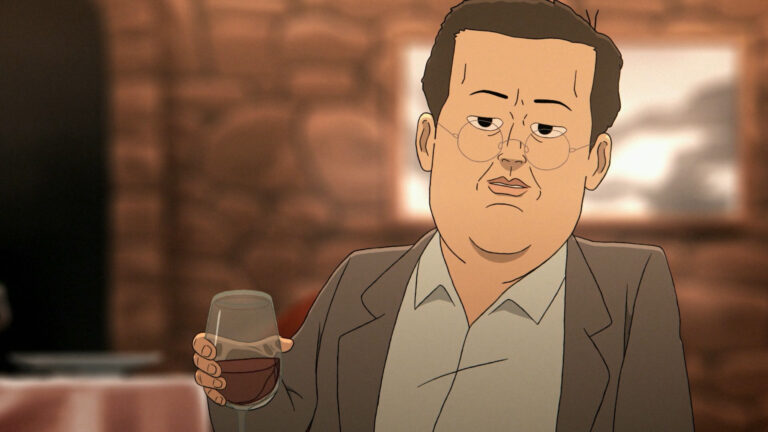
Rick Kruger, voiced by Mike Judge, is the CEO of Reutical Pharmaceuticals. Commonsideeffects.tv’s deep dive on Rick calls him a near‑perfect caricature of Big Pharma leadership. He talks in management jargon, dodges responsibility, and cares more about investors than patients.
In Season 1, Rick often feels like a buffoon. The show uses him for humor as much as for menace. However, several analyses argue that the Season 1 finale plants the seeds for a sharper turn. When he discovers and brands the mushroom byproduct as Sparkl in “Raid,” he shifts from chasing Marshall’s discovery to owning his own version of it.
Season 2 preview pieces describe a more consequential Rick:
- Reutical leadership, under his watch, skips meaningful long‑term studies of Sparkl
- They shrug off early warnings about side effects in favor of hitting launch targets
- Rick becomes the public face of the Sparkl rollout, enjoying a short‑term image boost
- As Sparkl spreads, online backlash grows, and regulators start circling
A fan‑theory roundup on commonsideeffects.tv goes further and suggests that once Sparkl takes off, Rick becomes an “accidental kingpin.” He suddenly holds power he never really earned. That piece notes that fans are split on whether he is still just lucky and clueless, or whether the show will reveal a more calculating side.
Regardless of how Season 2 ultimately handles him on screen, the direction is clear. Sparkl turns Rick from a mostly comic executive into someone whose decisions have visible, widespread consequences in the world of the show.
Sparkl as pharmaceutical satire, not just a plot device
The creators of Common Side Effects have said in interviews that they wanted the show’s conspiracy and pharma elements to feel realistic. To do that, they spoke with people inside pharmaceuticals, mycology, law and biology. They also built the series around the idea that the American health‑care system itself is the main villain, more than any one character.
Sparkl sits right at that intersection of research and satire.
A Rick Kruger analysis on this site draws an explicit line between Sparkl’s rollout and real‑world drug scandals. It highlights several familiar beats:
- Internal pressure to “fast‑track” a promising product
- Manipulated or selectively presented clinical trial data
- Aggressive marketing that outpaces the science
- Stock surges and investor calls that reward speed over caution
- Social‑media backlash and eventually political hearings when harms surface
In that framing, Sparkl is not just “what happens if you put Blue Angel in breakfast cereal.” It mirrors real episodes where “miracle” pharmaceutical products reached the market with dramatic claims, then faced serious safety questions once people used them at scale.
The difference in Common Side Effects is the delivery method. Here, the miracle compound sits inside everyday food, not just prescription bottles. The show exaggerates, but it keeps the core pattern recognizable for anyone who has followed drug‑safety headlines over the last two decades.
Sparkl versus Marshall and Frances: Two paths for Blue Angel
The Season 1 finale sets up a clear fork in the road.
On one side, you have Marshall and Frances. After the raid, they decide that Blue Angel should not belong to any one company. Recaps describe their new plan as a commitment to stop patenting the fungus and to share its healing potential more openly, without repeating the mistakes of early commercialization.
On the other side, you have Reutical and Rick. In the same episode’s closing minutes, he takes a leftover piece of the same phenomenon and repackages it as Sparkl, a proprietary, branded product.
That contrast matters for how Sparkl functions in the story.
- Marshall and Frances treat Blue Angel as a shared resource with moral weight
- Rick treats its byproducts as raw material for a profitable additive
- Sparkl becomes the corporate, commodified mirror of their more idealistic project
Season 2 commentary suggests that this tension will drive a lot of upcoming conflict. If Sparkl succeeds globally, Reutical’s lawyers and lobbyists suddenly gain new leverage over anyone still working with the original mushroom. That includes Marshall and Frances, who already faced federal raids and corporate pressure in Season 1.
We do not yet know exactly how that power struggle plays out on screen. But we know Sparkl is the economic engine that makes it possible.
What we still do not know about Sparkl (as of November 2025)
It is important to be clear about the limits here.
As of late November 2025:
- Only Season 1 of Common Side Effects has aired
- Adult Swim has renewed the series, but has not announced a Season 2 date
- No full Season 2 episode synopses focused on Sparkl have been released publicly
Most detailed Sparkl talk beyond the Season 1 finale comes from:
- Recaps of “Raid,” which firmly establish Sparkl’s origin and basic form
- Character features and thematic essays that use Sparkl as an example of Reutical’s behavior
- Fan‑theory roundups and speculation pieces, which extrapolate from existing patterns
Those speculative pieces are usually labeled as such. They often reference Reddit discussions or general expectations for a conspiracy‑driven show. They are useful for understanding how the community sees Sparkl, but they are not proof of exactly what will happen in Season 2.
So while we can say with confidence that:
- Sparkl is Blue Angel‑derived
- It is a mushroom‑based food additive produced by Reutical
- It carries Blue Angel‑style mental and perceptual risks into everyday foods
We cannot yet point to specific Season 2 episodes and say, for example, “in episode three, Sparkl causes X fallout in city Y.” Those details will only become factual once Season 2 airs or Adult Swim releases more concrete material.
What happens next for Sparkl
Looking ahead, Sparkl is positioned to become one of the key pressure points in Common Side Effects.
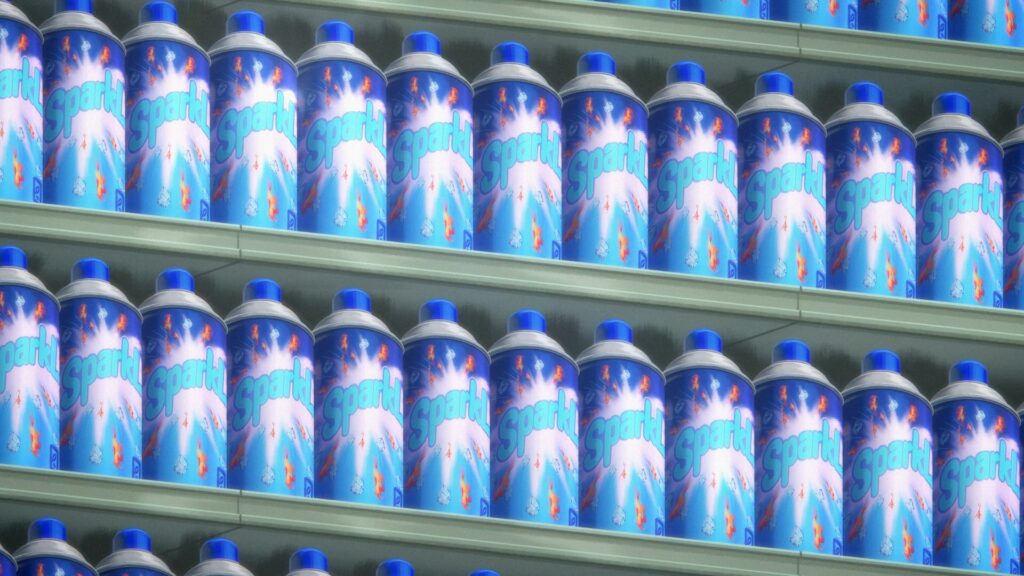
On the narrative side, it gives the show a simple, visual way to raise the stakes. Blue Angel started as a glowing fungus in a shed. Sparkl turns it into something you could see on a supermarket shelf, in a school cafeteria, or on a break‑room table. That shift lets the writers move from individual trips and healings to system‑level consequences.
On the thematic side, Sparkl sharpens the series’ critique of health‑care capitalism. It distills real concerns about rushed approvals, manipulated data and marketing‑driven medicine into a single, easy‑to‑recognize product that viewers can track from boardroom to grocery aisle.
For now, the facts are straightforward:
- Sparkl is a Blue Angel byproduct, formulated as a food additive
- Rick Kruger and Reutical create and market it after the “Raid”
- It promises Blue Angel‑style benefits while quietly carrying many of the same risks
Everything beyond that sits in the near future of the show. Once Adult Swim announces a Season 2 date and episodes begin airing, we will have a better sense of just how far Sparkl spreads, how badly it goes wrong, and whether anyone in the world of Common Side Effects manages to clean up after it.