Shannon Woodward: From Westworld’s Elsie to Common Side Effects’ Amelia
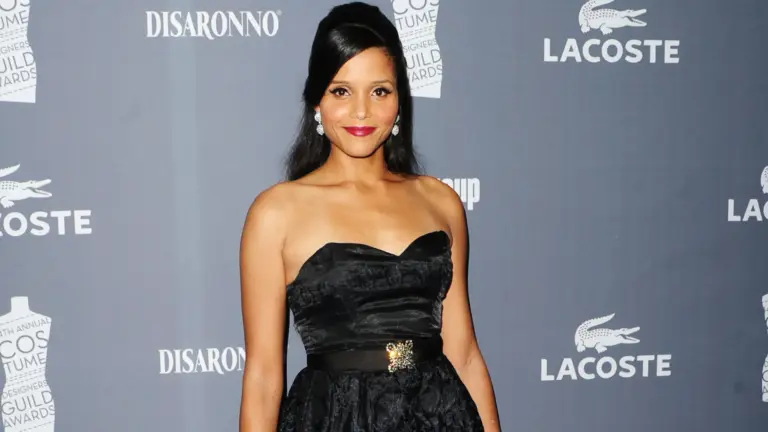
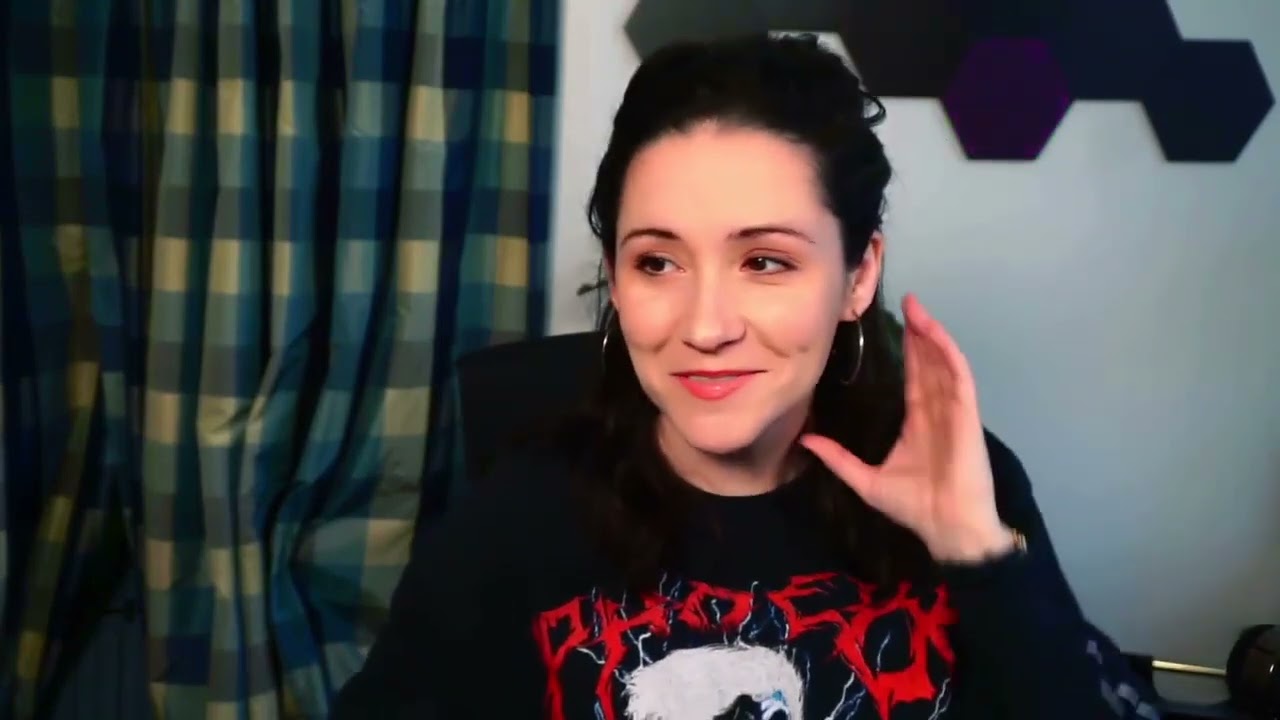
Shannon Woodward’s career over the last decade traces a very particular path through modern genre storytelling.
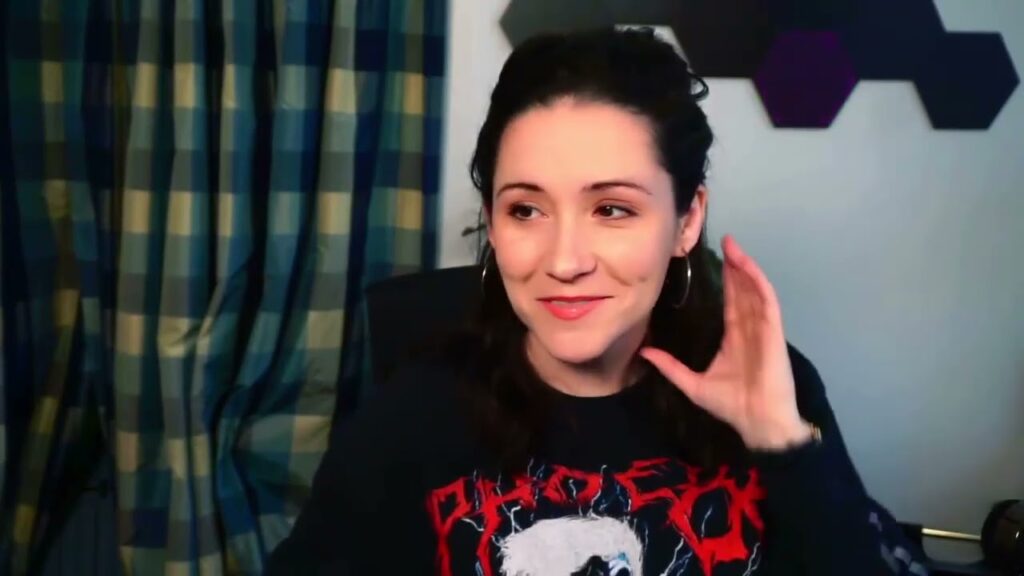
She moved from HBO’s puzzle‑box sci‑fi drama Westworld, to a prestige PlayStation franchise with The Last of Us Part II, and now to Adult Swim’s animated conspiracy thriller Common Side Effects.
Across all three, she keeps ending up in similar territory: smart women inside powerful systems, trying to do the right thing while the machinery around them grinds people up.
For Common Side Effects viewers who know her mainly as Amelia, it is worth stepping back and seeing how she got here.
From Delos Labs to Fan Theories: Woodward’s Westworld Breakout
Shannon Marie Woodward has been acting since the early 1990s, but Westworld is where many genre fans first locked onto her.
On the HBO series, which premiered in 2016, she played Elsie Hughes, a behavior programmer in the Delos theme park’s Diagnostics division.
Within the story, Elsie is a rising star in the Programming Department.
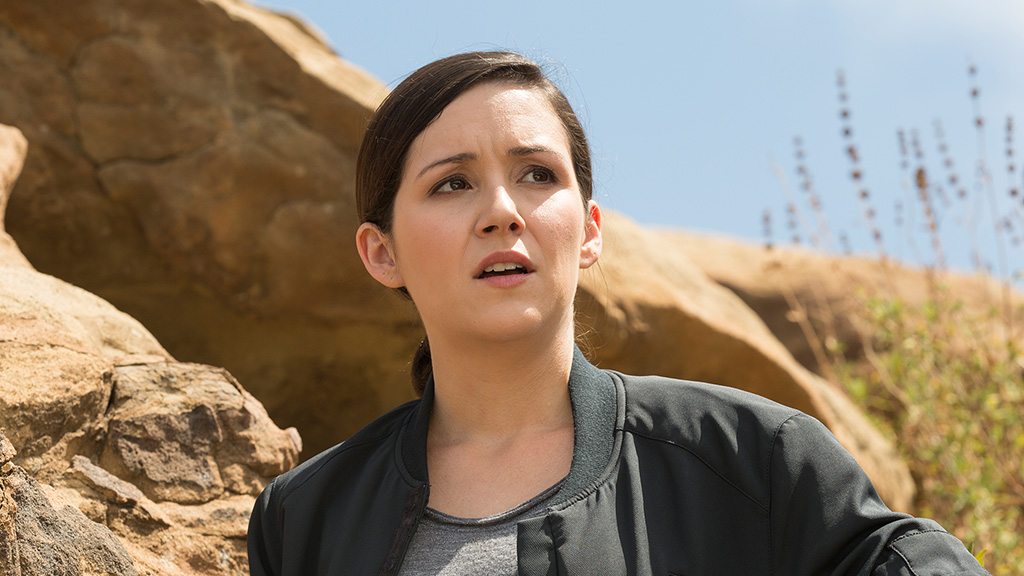
She spends her time tracking down hosts with strange glitches and pushing against the edges of what Delos will admit about its technology.
She works closely with Bernard Lowe and is written as sharp, funny, and impulsive in ways that undercut the show’s more solemn characters.
Elsie appears as a series regular in seasons 1 and 2, for a total of 13 episodes.
Her first appearance comes in the pilot, “The Original,” and her last in the season‑two finale, “The Passenger.”
The character’s apparent death in season 1 helped make her a fan‑favorite.
Bernard, under Dr. Ford’s control, attacks her in a remote facility.
For a long stretch, viewers are left to assume he killed her.
In season 2, the show reveals that Elsie actually survived, incapacitated and chained in a cave until Bernard frees her in “The Riddle of the Sphinx.”
She eventually dies for real when Charlotte Hale shoots her in “The Passenger.”
Offscreen, Woodward repeatedly pointed out that she never treated that first‑season attack as a definitive death.
In a 2018 interview, she said she was surprised by how many people assumed Elsie was gone, since she always knew she would be back.
She also described Elsie as a kind of audience proxy, saying in one profile that it felt like she was “playing [showrunners] Jonah and Lisa in a character,” structured almost as a classic hero figure reacting to the park’s secrets.
That combination of wry commentary and technical competence would follow her into her next major job, even if the medium changed.
Pursuing a Game She Loved: Landing Dina in The Last of Us Part II
Woodward’s move into high‑profile game performance started while Westworld was still on the air.
In April 2017, her casting in The Last of Us Part II became public.
She posted a photo with game director Neil Druckmann and joked that she was “peaking” because he was letting her act in the sequel.
Game outlets highlighted the crossover immediately, billing her as a Westworld actor joining Naughty Dog’s next big project.
What makes that transition more interesting is that she was not coming in cold.
Woodward has described herself as a longtime gamer who was already a fan of the first The Last of Us before she ever auditioned.
In a later interview summarized by DualShockers, she said she played the original game three times, and that it had a “profound effect” on her.
She talked about feeling complicit in Joel’s choices in a way she had never experienced in film or television.
According to that account, she compared it to a magician’s forcing trick, where you think you have free choice but every path leads you deeper into the same moral problem.
Her route into Part II ran through Westworld’s writers’ room.
Co‑writer Halley Gross worked on both projects.
At a party, Woodward learned Gross was collaborating with Naughty Dog.
She guessed correctly that it was for a sequel to The Last of Us and asked Gross to tell Druckmann she would “die to have a line in the game.”
That comment was not just idle flattery.
Months later, Gross told her there was in fact a role, but that she would need to audition.
Woodward did, and landed the part of Dina, later joking that she had “stalked [her] way into being part of the game.”
When The Last of Us Part II finally released on June 19, 2020 for PlayStation 4, Woodward was front and center.
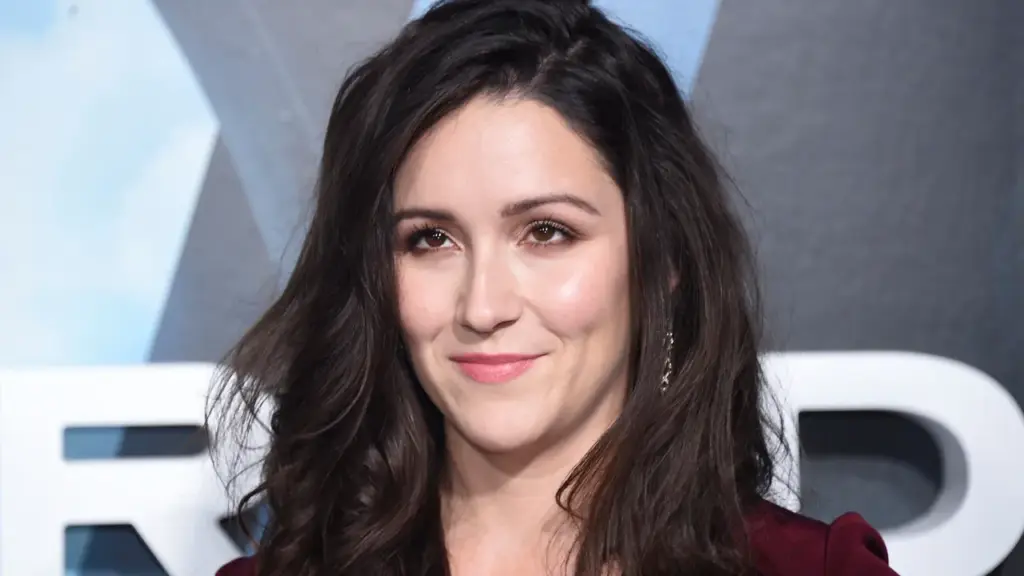
She provided both voice and performance capture for Dina, Ellie’s girlfriend and closest companion through much of the story.
The game itself became one of the biggest releases of the console generation.
It sold over 4 million copies in its first weekend, at the time the fastest‑selling PS4 exclusive, and had passed 10 million sales by 2022.
Critics gave it wide acclaim, and awards bodies followed; Woodward earned a BAFTA Games Award nomination for Performer in a Supporting Role at the 17th British Academy Games Awards for Dina.
The reaction from players was more complicated.
The game’s bleak story and structural choices sparked heated arguments and a review‑bombing campaign on Metacritic.
Woodward addressed some of that in real time on social media, at one point writing that there were “a lot of very upset bots afoot today” and later referring to “bot farms” that, in her view, were dragging down user scores.
By then, though, she had already committed to talking through the work in more measured settings.
Processing Dina in Public: Podcasts and Game Culture
Alongside the game’s launch, Sony and Naughty Dog released The Official The Last of Us Podcast, a limited series that unpacked both games episode by episode.
Later episodes in 2020 focused on Part II and brought in key cast members.
One episode titled “They Should Be Terrified of You” – Ellie features Woodward alongside Neil Druckmann, Halley Gross, Ashley Johnson, Troy Baker, and others.
There, she revisited what made the original game resonate so strongly, summing it up with a simple observation: for many players, it feels like “everyone loves Ellie — they took her across the country. We all did.”
That language lines up closely with her earlier comments about complicity.
She was clearly interested not just in “playing” Dina, but in how the character would be received by people who already felt personally invested in Ellie’s story.
In March 2021, she took that further on Good Game Nice Try, a gaming podcast from Team Coco.
The episode, released March 5, 2021, is titled “Shannon Woodward is a Dr. Mario Ninja.”
The show’s description notes that she talks about what she took away from playing Dina and how surreal it felt to see herself as a video‑game character.
Separate coverage of her interviews in 2020 and 2021 highlights another consistent theme: humor.
Woodward has said she and Druckmann spent time talking about how much real people rely on jokes and light moments when living through traumatic situations.
She explained that she was allowed to improvise some of Dina’s jokes, sometimes getting “15 seconds” in the booth to riff.
Several of those ad‑libbed lines, she said, made it into the final game.
By the time The Last of Us Part II Remastered hit PlayStation 5 on January 19, 2024, and the Windows version arrived on April 3, 2025, Dina had become firmly established as one of the franchise’s central characters.
Outside the games, her influence even reached into other media: director Fede Álvarez cited Dina’s pregnancy storyline in Part II when explaining why he wrote Isabela Merced’s character as pregnant in his film Alien: Romulus.
So Woodward was now associated with two very different but equally dissected genre properties.
Her next major role would put her voice at the center of a third.
Enter Amelia: A Mycologist in the Crosshairs of Common Side Effects
Common Side Effects arrived on Adult Swim in early 2025, and it wears its ambitions plainly.
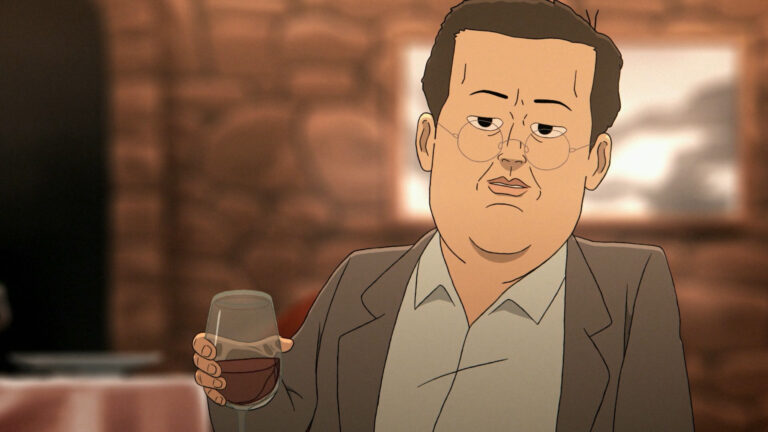
Created by Joe Bennett and Steve Hely and produced by Bandera Entertainment, the adult animated series pitches itself as a mix of conspiracy thriller, comedy drama, and pharmaceutical satire.
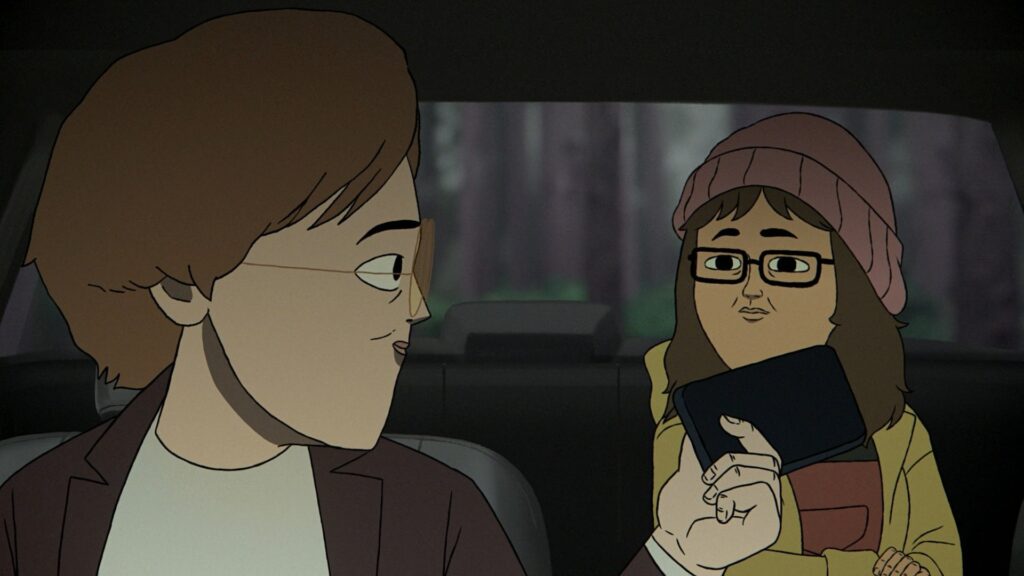
The pilot screened at the Annecy International Animation Film Festival in June 2024, then again during Adult Swim’s San Diego Comic‑Con 2024 panel, before the show officially premiered on February 2, 2025.
New episodes air Sundays at 11:30 p.m. ET/PT on Adult Swim and stream on Max the following day.
Season 1 runs for 10 episodes, each around 23 minutes.
Adult Swim later added an encore run on the Toonami block starting the weekend of March 1 — 2, 2025, with episodes airing through May 3, 2025.
The premise centers on two former high‑school lab partners, Marshall and Frances.
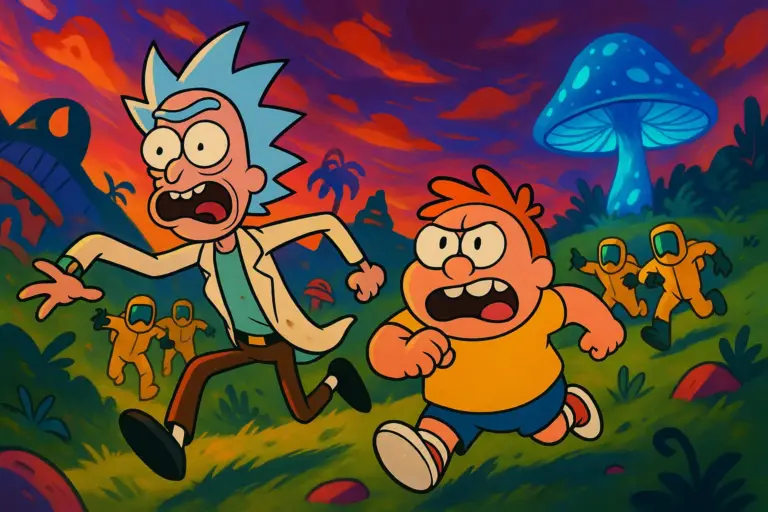
Marshall discovers the Blue Angel mushroom, a fungus that appears to cure all illnesses.
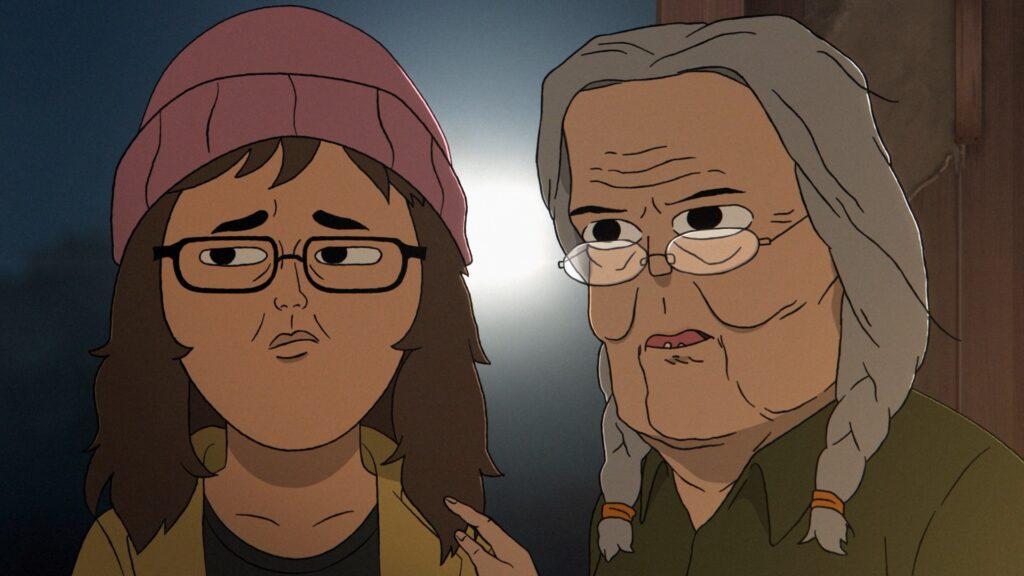
As they try to bring it to the world, they run up against Reutical Pharmaceuticals and multiple layers of government, including the DEA, that seem determined to suppress it.
Critics have focused on how directly the series tackles the U.S. healthcare system.
Polygon reported that the creators dug into real pharmaceuticals, mycology, and law to ground the show, comparing its tone to a mix of Coen brothers stories, The X‑Files, and whistleblower dramas like Erin Brockovich.
The Verge went even further, arguing that the U.S. healthcare system itself is effectively the show’s main villain, portrayed as corrupt and dehumanizing while individual characters remain more morally mixed.
That is the backdrop for Amelia, the character Woodward plays.
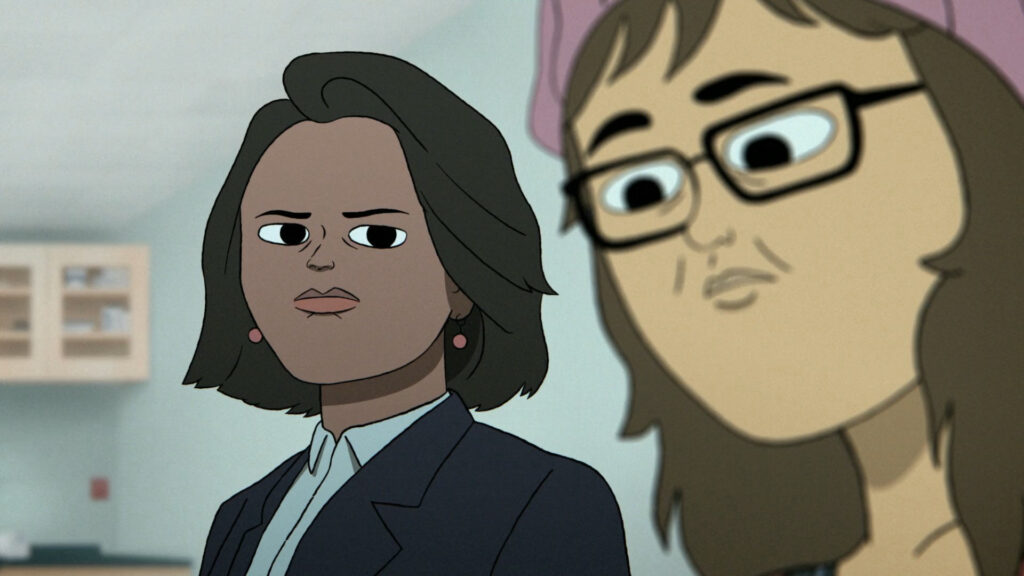
In the show’s official materials, Amelia is described as a laid‑back mycologist hired by the DEA to gather information on the Blue Angel mushroom.
She is also a single mother, caring for her ill son Wyatt.
Those two facts pull her in different directions from the moment she appears.
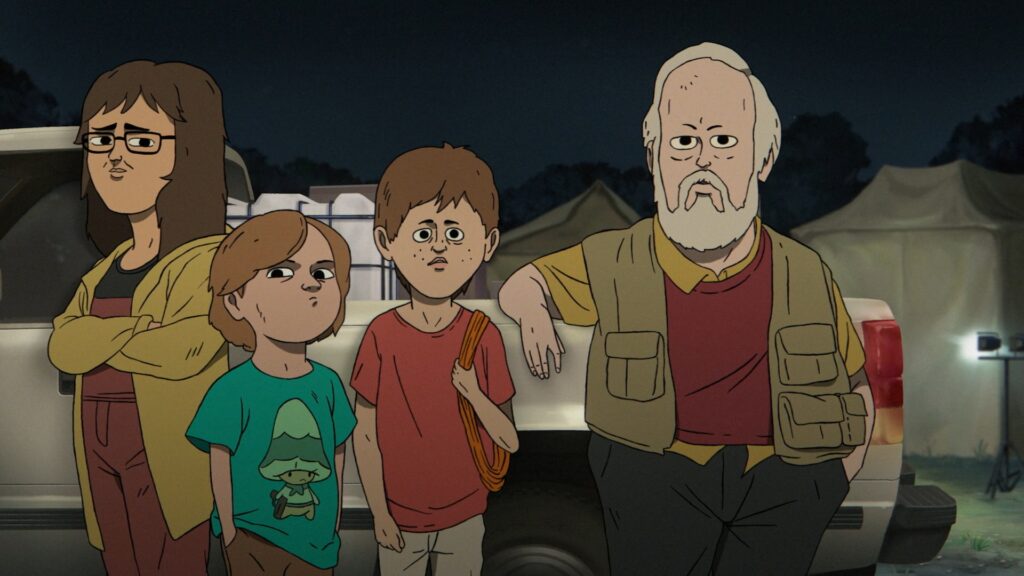
On the job, Amelia collects and analyzes the very fungus that could change Wyatt’s prognosis and, potentially, the entire healthcare landscape.
At home, she lives with the daily reality of an American family in a medical crisis.
That tension drives several plot turns that this site has covered elsewhere, including her role in hiding a tortoise named Socrates that accidentally becomes a living nursery for Blue Angel spores.
A preview clip from episode 3, “Hildy,” released through CBR, shows her sifting through a haul of seized mushrooms from Marshall Cuso.
She tries to determine which specimens might be illegal, a small moment that underlines her strange position between science, enforcement, and compassion.
For Woodward, Amelia represents another scientist caught inside a system much larger than herself, echoing some of the dynamics of both Elsie and Dina.
Satire in a Lab Coat: Woodward’s Voice Work on Common Side Effects
Amelia operates on two levels within Common Side Effects.
In the main story, she is the DEA’s mycological expert and a mother under pressure.
In the margins of the show, she becomes something closer to a mascot.
As we have noted in previous breakdowns on this site, Woodward also voices Amelia in Reutical’s in‑universe pharmaceutical ads during the season.
These fake commercials run inside episodes as if they were regular TV spots, complete with glowing disclaimers and breezy promises.
In those segments, her performance shifts noticeably.
Earlier CommonSideEffects.tv coverage has described this version of Amelia as “chirpy” and “slightly off‑kilter,” a direct parody of late‑night pharma PSAs.
She leans into the over‑sanitized tone of real drug advertising, selling a miracle pill while the show’s main plot exposes the cost of those promises.
In our “Best Voice Performances S1” feature, we highlighted her work as “infectious satire in a peppy package.”
Writers and staff quoted for that piece noted that internal reports from the room said her fake‑ad read‑throughs often left the team laughing.
Outside the show, those spots have already inspired remix videos and edits on social platforms, proof that even brief, tightly written ad copy can register if the delivery lands.
Across both the dramatic and satirical sides of Amelia, Woodward brings in tools she honed on The Last of Us Part II.
Her timing with jokes, her ability to pivot from warmth to unease, and her comfort carrying scenes mostly with her voice all date back to that performance‑capture work.
At the same time, the subject matter connects cleanly with themes she has already worked through in her other projects.
A Through‑Line of Science, Systems, and Moral Gray Areas
Seen together, Elsie, Dina, and Amelia do not look like random gigs.
They form a neat little line through some big questions.
Elsie Hughes is a programmer inside Delos, a corporation that hides violence and exploitation behind cutting‑edge tech.
She spends most of her screen time poking at things her bosses would rather keep buried, and she pays a price for it.
Dina in The Last of Us Part II lives in a world reshaped by a failed attempt to contain a pandemic.
Various factions, from the Fireflies to the WLF, claim to offer order and safety, but every institution is compromised.
Her personal story involves love, pregnancy, and survival inside that chaos.
Amelia is a scientist whose entire job is to study a fungus that could overturn the pharmaceutical industry and parts of the U.S. healthcare system.
She is paid by the DEA, intertwined with a company like Reutical, and trying to keep her own child alive.
The show’s creators have said they treat the healthcare system itself as a kind of villain.
That framing puts Amelia in an uneasy place, similar to Elsie at Delos or Dina within the uneasy alliances of The Last of Us.
In each case, Woodward plays someone who understands the science and sees the harm, but does not have clean options.
There is also a through‑line in how these stories ripple outward.
Westworld generated years of fan theories and dissected plot diagrams.
The Last of Us Part II provoked enormous debate, backlash, and eventually a TV adaptation.
That adaptation loops back to Woodward directly.
For HBO’s The Last of Us season 2, scheduled to premiere on April 13, 2025, the role of Dina goes to Isabela Merced.
Coverage of Merced’s casting in January 2024 noted that Woodward publicly supported the choice and explained that she was now “much older” than the character, who in the game is modeled on face actor Cascina Caradonna.
Merced later said she felt she had received an important “stamp of approval” from Woodward.
So even when she is not on screen, Woodward’s version of Dina continues to shape how the character is understood.
What Happens Next
As of late 2025, Woodward’s voice is anchored in two active franchises.
On the animation side, Common Side Effects is moving ahead.
Adult Swim announced a second‑season renewal on March 28, 2025, after season 1’s winter and spring run.
The show’s mix of conspiracy thriller and healthcare critique gives Amelia plenty of room to evolve, especially as the Blue Angel mushroom plot widens and her son Wyatt’s condition stays on the table.
On the gaming side, The Last of Us Part II remains in circulation through the PS5 remaster and the Windows release, keeping new players meeting Dina for the first time.
At the same time, the HBO series is about to introduce millions more viewers to a different, live‑action version of the character, even as journalists and fans continue to reference Woodward’s performance as the template.
Looking at that full arc, the jump from Westworld to The Last of Us Part II to Common Side Effects makes a certain kind of sense.
Shannon Woodward keeps signing on to stories about people working inside opaque systems, trying to keep their conscience intact.
Elsie did it with a tablet in a control room, Dina with a rifle and a joke in a ruined Seattle, and Amelia with petri dishes, DEA paperwork, and a sick child at home.
For Common Side Effects viewers, that history adds another layer to Amelia’s scenes.
When she calmly identifies a mushroom strain for her handlers or smiles her way through a Reutical ad, there is a decade of hard‑earned experience sitting in the booth behind the mic.