
Adult Swim’s Common Side Effects is packed with big ideas. It mashes up psychedelic conspiracy thriller, healthcare satire, and workplace comedy, then runs it at 11:30 p.m. on Sundays.
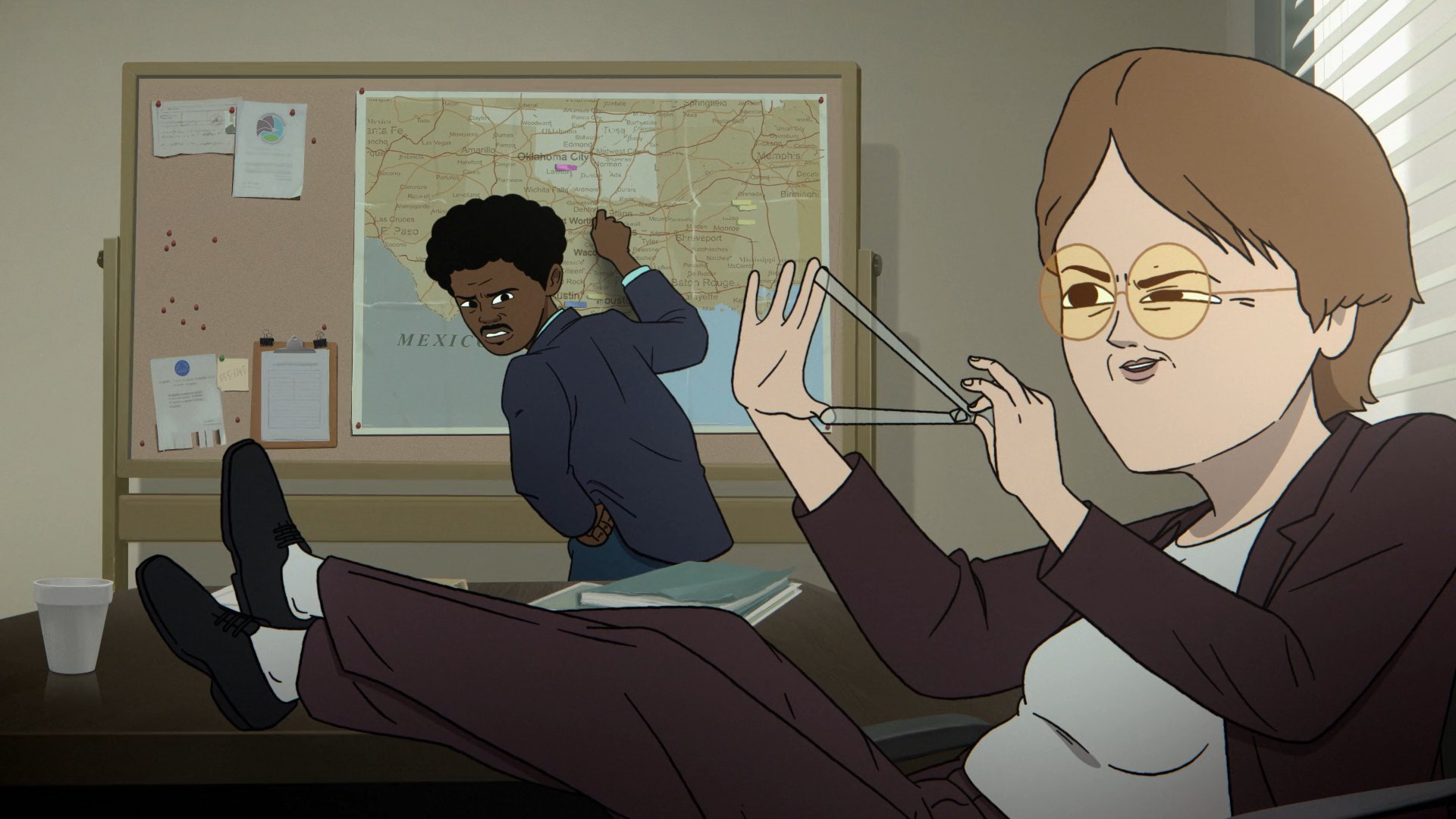
Yet for a lot of viewers, the heart of the show is surprisingly simple: two DEA agents in a car, bickering about music, paperwork, and mushrooms that might rewrite medicine.
Those agents are Copano and Harrington, voiced by Joseph Lee Anderson and Martha Kelly. Their buddy‑cop chemistry, delivered in an almost aggressively low‑key style, has become one of the most talked‑about parts of the series since it premiered on Adult Swim on February 2, 2025, with episodes streaming next day on Max.
Here is how that pairing came together, why their scenes feel half improvised, and how two character actors ended up anchoring one of Adult Swim’s most ambitious shows in years.
Where Copano and Harrington Fit in Common Side Effects
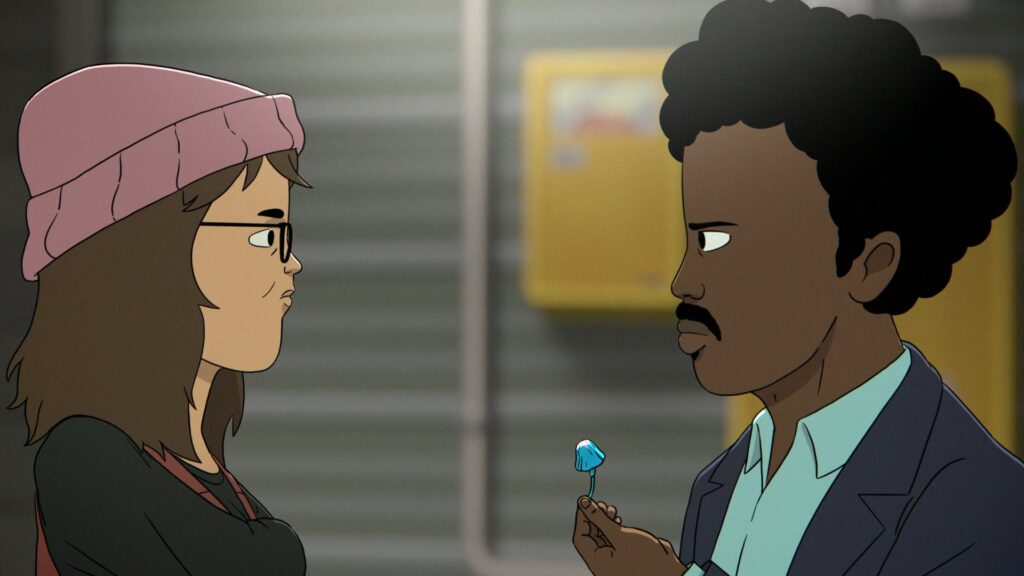
Common Side Effects, created by Joe Bennett and Steve Hely, follows former high‑school lab partners Marshall Cuso and Frances Applewhite. Marshall discovers a mysterious “Blue Angel” mushroom that appears to cure almost any injury or illness. Frances, now working for a pharmaceutical company, gets pulled back into his orbit when that discovery collides with corporate and government interests.
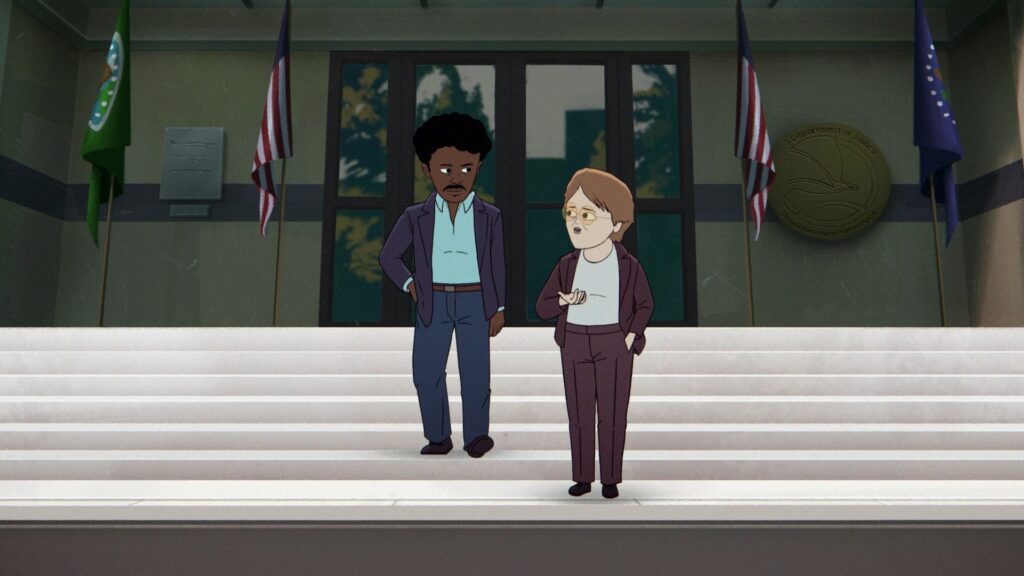
The mushroom quickly attracts attention from multiple fronts. One of the most persistent is the Drug Enforcement Administration. That is where Agents Copano and Harrington come in.
Official character materials describe them as “nonchalant best friends who work for the Drug Enforcement Administration.” Across Season 1’s ten episodes, they move from background surveillance to central players. Episode summaries show them:
- running raids that uncover strange fungi (“Hildy,” Episode 3),
- surveilling Marshall and Frances (“Star‑Tel‑Lite,” Episode 5),
- “picking up the pieces” after a major turn (“In the System,” Episode 6), and
- “zeroing in on Marshall’s location” at the mushroom farm (“Cliff’s Edge,” Episode 9).
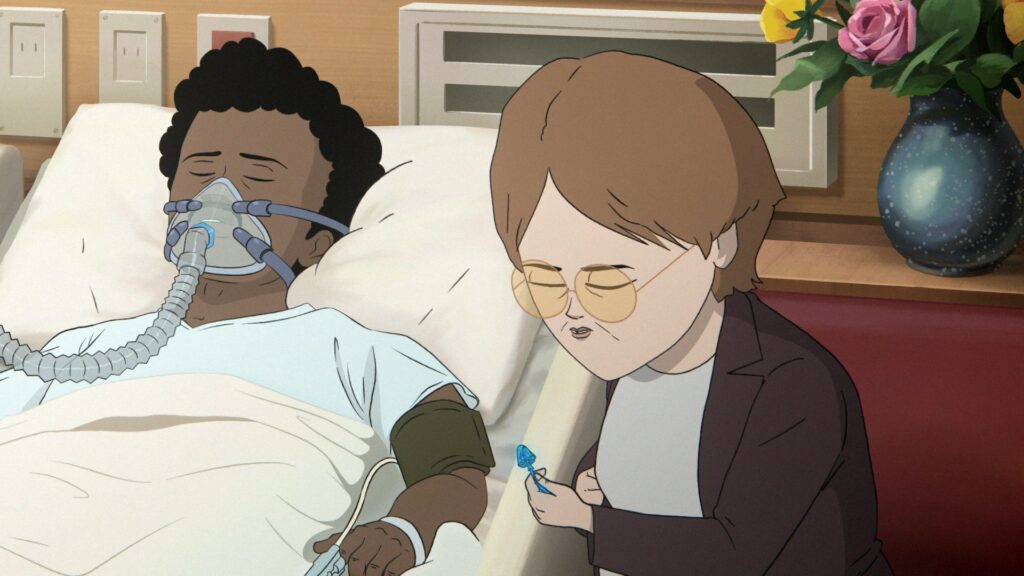
By the Season 1 finale, “Raid,” their decisions reshape the entire story. Copano finds Marshall’s body during a chaotic joint operation, revives him with the Blue Angel mushroom, then is badly wounded when the authorities storm the site. Later, Harrington visits Copano in the hospital, gives him the very mushroom their unit is supposed to eradicate, and drives off to find Marshall and Frances.
That arc is not comic relief. It is a full moral pivot, and it depends heavily on what Anderson and Kelly bring into the recording booth.
How Two Character Actors Became a Non‑Romantic “Love Story”
Co‑creator Steve Hely has been unusually open about what he wanted from Copano and Harrington. In a Reddit Q&A, later summarized on this site, he said the writers aimed to create “two people who are in love but not in a romantic way.”
Hely described the pair as colleagues bonded by long, boring stakeouts. The kind of workdays where you talk about everything except work. That tone shows up immediately on screen.
In one early scene highlighted by Slashfilm, Copano blasts Harry Belafonte’s “Jump in the Line” directly into Harrington’s earpiece while she buys a hot dog. They both start dancing, barely acknowledging the absurdity, then slide back into their investigation. Slashfilm called them “one hell of a buddy cop pair,” arguing that the moment tells you almost everything about their dynamic.
Hely has also explained how Joseph Lee Anderson landed in the booth. His wife had worked with Anderson on NBC’s Young Rock, where Anderson played wrestler Rocky “Soulman” Johnson. That connection put Anderson on the short list when they were casting Copano. The team then imagined who could play opposite him and quickly gravitated to Martha Kelly, who had recently broken out beyond stand‑up through FX’s Baskets and a chilling turn as drug dealer Laurie in HBO’s Euphoria.
In an interview with ComingSoon, Hely said working with Anderson and Kelly allowed them to “tell a love story that isn’t a romantic love story.” He emphasized that they wanted to show “two people who work together and really care about each other,” and he added that Anderson and Kelly themselves “started to actually care about each other” as recording continued.
That real‑world rapport now underpins the show’s most reliable two‑hander.
Joseph Lee Anderson: From Young Rock to Conspiracy‑Minded Copano
Joseph Lee Anderson’s route to animated DEA agent runs through pro wrestling, period drama, and a lot of uniforms.
Born February 22, 1993, in Kansas City, Kansas, Anderson studied at Rogers State University in Oklahoma before moving into acting. Before Common Side Effects, audiences mostly knew him from live‑action work:
- Rocky Johnson on NBC’s Young Rock,
- supporting roles in Harriet, MacGruber, and Tyler Perry’s Divorce in the Black,
- guest spots on procedural and action series like S.W.A.T., NCIS, Hawaii Five‑0, and Blue Bloods.
He also wrote and directed the short film The Jog, which screened at SXSW 2019 and won Best Heartland Narrative Short at the Kansas City FilmFest.
The physical commitment he showed for Young Rock was intense. In interviews, Anderson has said he had only about two months to transform into a convincing version of Rocky Johnson. Working with Los Angeles trainer Tim Hamilton, he reportedly ate around 5,000 calories a day, gained roughly 30 pounds, and added more than 16 pounds of muscle to reach a weight near Johnson’s billed 250 pounds.
There is another layer too. Anderson has described himself as shy and introverted in real life. Playing Johnson required him to stride into every scene like the biggest star in the arena. That contrast between his nature and his characters’ presence turns out to be useful for Agent Copano.
On this site, we have noted that Copano’s energy feels like a psychological version of that transformation. He is introduced as a conspiracy obsessive, a man who, in Anderson’s own words for a promo piece, “likes to connect dots when they probably should not be connected.” His suspicion level never really drops.
What changes in Common Side Effects is the toolkit. Here, Anderson has no ring entrance, no physical charisma to lean on. Everything about Copano’s intensity has to come through voice: breath patterns, pacing, how fast he talks when the theories start stacking up. The show’s underplayed style, which we will get to shortly, forces him to find a quieter way to sell paranoia.
By the end of Season 1, that paranoia turns into something closer to faith crisis. Once he has seen what the mushroom can do and survived only because of it, Anderson has to voice a Copano whose worldview is wobbling, even as he tries to keep his professional posture.
Martha Kelly: Deadpan Royalty Behind Agent Harrington
If Anderson supplies the jittery energy in the car, Martha Kelly supplies the ballast.
Born February 24, 1968, in Torrance, California, Kelly spent decades as a stand‑up comic before most TV viewers knew her name. A 2016 Austin Chronicle profile described her stage persona as dry and deadpan, almost “bordering on comatose” in affect, with jokes that land precisely because she refuses to sell them.

Her acting career followed that tone. On FX’s Baskets, co‑star Zach Galifianakis reportedly encouraged her to “just be yourself,” and producers built a character around that same low‑key presence. The shift from there to drama took many people by surprise.
In Euphoria, Kelly plays Laurie, a soft‑spoken drug dealer whose calm delivery makes her more unsettling, not less. The performance earned her a Primetime Emmy nomination in 2022 for Outstanding Guest Actress in a Drama Series. She has also appeared in films like Spider‑Man: Homecoming and Marriage Story.
By the time Common Side Effects premiered, Kelly had also led the 2023 Netflix animated series Carol & the End of the World, where critics praised her “dour wit” and understated emotion. She had effectively become a go‑to actor for roles that mix comedy, menace, and resignation.
The Common Side Effects creative team leaned into that reputation. In a writers’ room feature, they describe casting Kelly because her “flat, deadpan style just nails that dead‑eyed desk jockey vibe” they wanted for Agent Harrington.
Kelly herself has summed up Harrington as “goofy but… very pragmatic about [her] job.” That combination shows up in the scripts and in how she reads them. Harrington does not yell. She rarely even raises her voice. Many of her biggest laughs come from sighs, clipped responses, or a tired mutter that undercuts Copano’s spiraling monologues.
Several pieces on this site have pointed out that Harrington feels like an almost perfect mid‑level bureaucrat. She is exasperated, buried in paperwork, and much funnier than she realizes.
Inside the Booth: Underacting, Open Mics, and That Deadpan “Improv” Feel
So why do Copano and Harrington’s scenes often feel half improvised, even when they are not? A lot of that comes down to how Bennett and Hely ran their recording sessions.
In an interview with The Wrap, the co‑creators said their most common note to actors was simply: “do less acting.” They wanted the show to be “funny without being jokey,” citing the Coen brothers as an influence on tone. That meant no punchline delivery, no big cartoon voices. Just people talking, often about the wrong thing at the wrong time.
To support that, the team kept microphones running before and after recording takes. They wanted to capture the “mundane chatter of people living in the real world,” the filler talk that happens when colleagues are killing time.
Bennett has said Martha Kelly was “definitely a person that we would want to do that to,” because there was “so much rich material that we can inject into this character.” He also mentioned that Kelly had long wanted to play a detective, and they happily wrote Harrington toward that wish.
The creators have not claimed that Anderson and Kelly are fully improvising entire scenes. Scripts still matter, especially in a plot this dense. However, between the “do less” directive and the open‑mic approach, their deadpan rhythm often comes from captured fragments, natural pauses, and offhand comments that made it into final cuts.
Another piece of the puzzle is animation timing. In interviews about the broader cast, Bennett and Hely said they recorded actors, then sometimes pivoted the direction of characters based on those sessions. Animators were asked to track tiny vocal idiosyncrasies, building facial expressions or gestures that matched a particular hesitation or muttered aside.
For Copano and Harrington, that means Copano’s rushed, theory‑heavy riffs and Harrington’s flat responses are not just written gags. They are backed by animation keyed to real, sometimes unscripted, cadences. The end result feels closer to live‑action two‑hander comedy than to a typical joke‑per‑minute cartoon.
Buddy‑Cop Energy in a Bleak Healthcare Story
Critics have noticed.
Collider ran a piece titled “The Best Part About Max’s New Conspiracy Thriller Is These Two Characters,” arguing that Common Side Effects is really Copano and Harrington’s story and that “everyone else is just living in it.” The article describes them as government agents who seem to have “a little too much fun on a case that couldn’t be more serious.”
Slashfilm praised the same contrast, framing the show as a dark anti‑Last of Us story about healthcare, then singling out the Belafonte hot‑dog scene as a perfect buddy‑cop beat. Decider, in recommending viewers “Stream It,” described them as “more co‑dependent than most law enforcement partners,” implying that their relationship sometimes overshadows the case itself.
Within the show’s themes, that balance is deliberate. In interviews with outlets like The Verge, Bennett and Hely have stressed that they did not want clear cartoon villains pulling every string. Instead, they portray everyone, including the DEA, as people caught inside a violent, profit‑driven system around healthcare and drugs.
The writers even spoke with retired DEA agents while developing the show. Those real agents described fentanyl dealers as “the most evil people in the world.” Copano and Harrington inherit some of that mindset. They are not depicted as pure thugs or pure heroes. They are professionals who believe they are preventing harm, even as the case around the Blue Angel mushroom forces them to confront contradictions.

Across Season 1, episode guides and character pieces track a gradual shift. Early on, Copano’s “fanatic conspiracy‑driven enthusiasm” reads as comic overreach, while Harrington’s pragmatism keeps them on the rails. As they witness the mushroom’s effects and the institutional response, both agents begin to question their mission.
That evolution culminates in Harrington’s hospital choice: she saves Copano with the mushroom rather than treating it purely as contraband. Fans have seized on that moment in speculation threads, debating whether the duo may eventually defect, whistleblow, or try to work change from the inside.
However the writers answer that, Anderson and Kelly’s performances have already pushed Copano and Harrington beyond stock “fed” caricatures into something messier and more human.
What Happens Next for the DEA Duo
From an industry standpoint, Common Side Effects has already made a mark. Season 1 drew strong reviews, landed at #7 on Max’s “most popular shows of the week” chart in early February 2025, and earned an Emmy nomination for Outstanding Animated Program for Episode 9, “Cliff’s Edge.” The Television Academy also placed the series among its 2025 nominees alongside bigger‑budget entries.
The show picked up a Television Critics Association nomination for Outstanding New Program and a Film Independent Spirit Awards nomination for Best New Scripted Series as well. It did not take home the Emmy, which went to Arcane, but coverage frequently described Common Side Effects as the experimental underdog in the field.
Adult Swim announced a Season 2 renewal on March 28, 2025, just ahead of the Season 1 finale. As of early January 2026, the network has not released a premiere date or episode count, and official materials have not detailed where Copano and Harrington’s story will go next. On this site, we have emphasized that any specific Season 2 timeline remains speculation until Warner Bros. Discovery or Adult Swim says otherwise.

What is clear already is that Joseph Lee Anderson and Martha Kelly will be central to whatever comes. The creators have publicly framed Copano and Harrington as a non‑romantic love story inside a show about mushrooms, capitalism, and American healthcare. Critics have latched onto them as the standout pairing. And the recording process, with its underplayed performances and captured off‑the‑cuff chatter, has given the agents a quietly improvised feel that stands out even in today’s crowded animation field.
When Common Side Effects returns, viewers will be watching the pharma intrigues and the mushroom mythology. But a lot of fans will be waiting for something smaller: Copano and Harrington back in a car, arguing about nothing in particular, trying to decide whether they are still on the right side of the case.