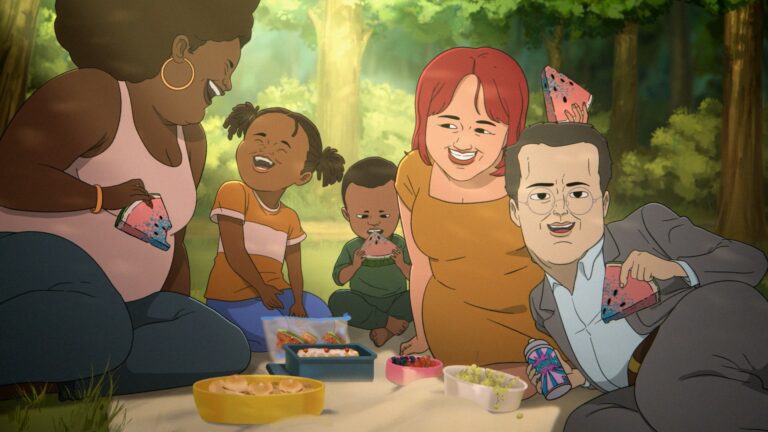
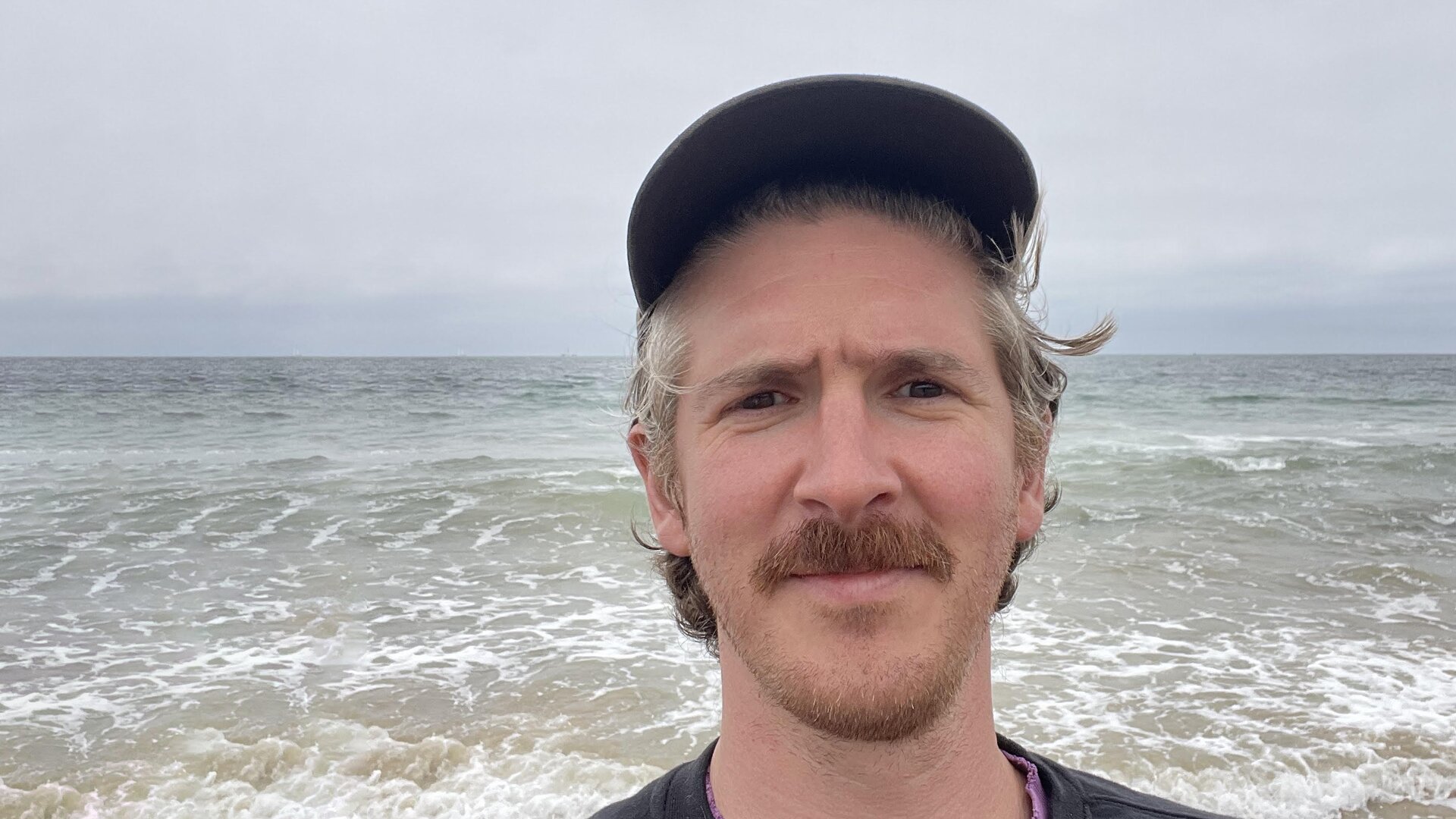

When Common Side Effects arrived on Adult Swim, it didn’t feel like a clean break from the creative world that produced Scavengers Reign. Instead, it looked like a continuation of a specific animation mindset, one that treats each sequence like filmed drama. A big reason is supervising director Benjy Brooke, who served in that same role on Scavengers Reign and later brought similar priorities into Common Side Effects.
This isn’t just a “same people, new show” story. It’s a story about a working method. It’s also about how a crew forms, how it stays together, and how the look of a series gets protected across episodes.
Below is what’s known from official releases and reported interviews about Brooke’s role as a bridge between the two projects. It includes his approach to camera language, his recruiting mindset, and how Common Side Effects positioned itself as a grounded, cinematic-feeling series on Adult Swim.
The basics: where Common Side Effects landed, and when viewers first got it
Adult Swim set an unusually clear rollout for Common Side Effects, and the dates matter because they show how the network wanted audiences to keep up.
In a Warner Bros. Discovery press release, Adult Swim announced the series would premiere Sunday, Feb. 2, 2025, on the network. The same release said the show would launch with two back-to-back episodes, followed by one new episode every Sunday. It also said episodes would stream the next day, Mondays on Max. Adult Swim also pointed to early audience interest, saying a YouTube sneak peek had “over 1.4 million views and counting.” (Warner Bros. Discovery press release, Dec. 12, 2024)
Then, less than two months after the premiere, Adult Swim made a second big move. On March 28, 2025, the network announced it had renewed Common Side Effects for Season 2. In that renewal announcement, Adult Swim president Michael Ouweleen described the show as “boundary-pushing.” (Warner Bros. Discovery press release, March 28, 2025)
That timeline, February premiere followed by a March renewal, frames the larger point. Adult Swim wasn’t treating Common Side Effects as a one-off experiment. It was treating it as a franchise-level bet.
Before Adult Swim: an early public test at Annecy
Even before the February 2025 debut, Adult Swim put the show in front of a hard-to-please audience.
A Warner Bros. Discovery press release announced a world-premiere screening of the first episode at the Annecy International Animation Film Festival, along with a “making-of panel.” The listed panelists included series co-creator Joe Bennett, co-creator Steve Hely, Ouweleen, and Williams Street executives Suzanna Makkos and Dustin Davis. (Warner Bros. Discovery press release on Annecy screening)
It’s a useful detail because Annecy isn’t simply a press stop. It’s a place where animation crews compare craft notes in public, and where industry peers pay close attention to visual approach.
That context matters when you start looking at how the show talks about “cinematic” intent. Common Side Effects wasn’t shy about those goals.
The connective tissue: Benjy Brooke as supervising director on both shows
Brooke’s title is not a fan inference. It’s explicitly stated in official materials.
A Warner Bros. Discovery press release for Scavengers Reign states, plainly, that “Benjy Brooke serves as supervising director.” (Warner Bros. Discovery press release on Scavengers Reign)
In other words, when people talk about a Scavengers Reign “look,” Brooke is part of the leadership structure that kept that look consistent across episodes. That becomes even more relevant because reporting later described Brooke moving into a similar leadership position on Common Side Effects.
A Variety-reported feature, syndicated on Yahoo, says Brooke became supervising director for Common Side Effects as well. (Variety via Yahoo / Green Street Pictures feature)
So the “crew reunites” headline isn’t just about a few artists bouncing between gigs. It’s about a supervising director carrying a sensibility, and helping a team repeat a production model that already worked.
What Brooke means by “cinematic,” in his own words
“Cinematic” can be a slippery term in animation coverage. However, Brooke has described his meaning in specific, repeatable decisions.
In an interview with Collider about Scavengers Reign, Brooke said: “We always wanted to make our camera work, our shot choice, our acting feel as elevated and cinematic as possible.” (Collider interview with Brooke and Bennett)
That quote is doing three jobs at once. It ties “cinematic” to camera language. It ties it to shot selection. It also ties it to performance, which matters because animation acting often separates itself from live-action performance grammar.
Brooke also gave a concrete rule that suggests discipline rather than stylistic chaos. He said: “Let’s not move the camera around very much, keep it locked off and that just creates this really nice rhythm for the whole series.” (Collider interview)
That locked-off approach is the kind of decision that can ripple across production. It affects storyboarding. It affects layout. It also affects how background painting reads, because a steady frame invites the viewer to study the world.
Just as important, it’s a rule that can be taught, enforced, and repeated across multiple directors and crews. That becomes a useful lens for Common Side Effects, which publicly emphasized grounded cinematic reference as part of its own method.
Common Side Effects openly chased “grounded” and “real,” and credited Brooke
When creators describe a show’s style, credit matters. It’s one thing to say “we went cinematic.” It’s another to name the people responsible for making it happen.
In a ComingSoon interview, Bennett said the team tried to “lean into the cinematic world” and make things “feel grounded and feel real.” (ComingSoon interview with Bennett and Hely)
In the same interview, Bennett directly identified Brooke’s leadership role, naming “Benjy Brooke, the supervising director,” and also mentioning Wes McClain plus episodic directors including Camille Bozec and Vincent Tsui. (ComingSoon interview)
That list helps establish how the show could be “cinematic” while still being episodic. It points to a structure where multiple directors bring their strengths, while a supervising director helps unify the final result.
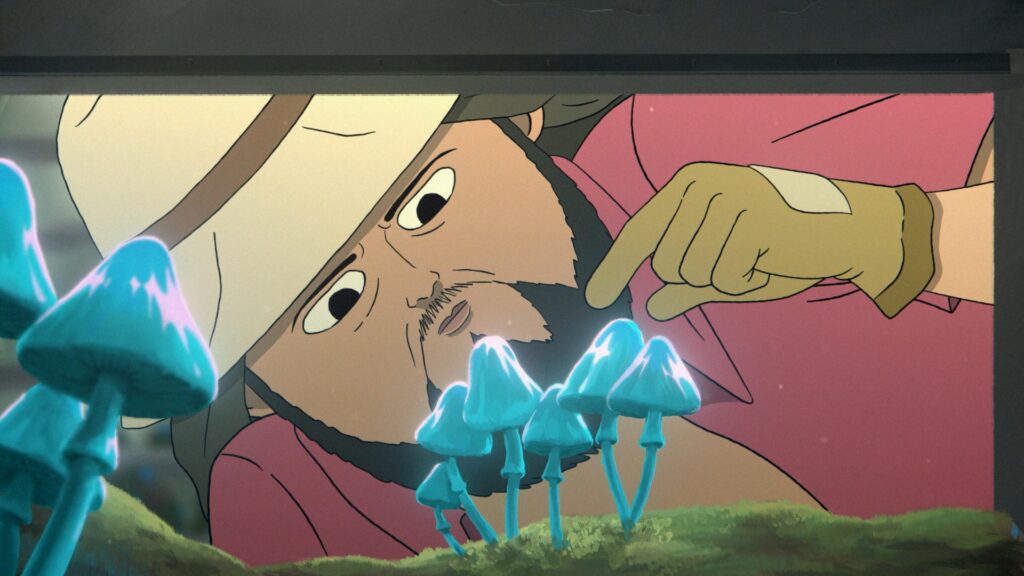
Another interview, syndicated on Yahoo, adds a complementary detail about process. Hely said artists look up real-world references and “shots from old movies,” and that this creates a “cool, cinematic quality.”
So on one side, you have Brooke’s Scavengers Reign method: disciplined camera rules, elevated acting, and careful shot choice. On the other, you have Common Side Effects describing a reference-driven process aimed at grounded realism. The words are different, but the values align.
Recruiting and the “crew reunites” story: Brooke’s taste, and what he’s looking for
The most direct reporting about Brooke’s recruiting approach comes from the Variety-reported Green Street Pictures feature syndicated on Yahoo. That piece puts language around what can otherwise feel like an invisible process.
The feature reports that many creatives who worked on Scavengers Reign later worked on Common Side Effects. It also describes a globally distributed collaboration model, noting artists in France, Greece, and Argentina.
That’s the structural part. The cultural part comes next.
The article says Brooke recruits animators, designers, and storyboard artists onto the team. Then it quotes him describing what he looks for. Brooke said it’s important to find new talent with a “sensitive, creative dowsing rod.” He also said the key is not finding someone who matches an “exact style,” but finding an “ineffable” quality that person adds to a project. (Variety via Yahoo)
This is a revealing statement because it resists the common studio logic of strict style replication. Brooke’s quote suggests a different approach. It suggests the supervising director’s job is partly curation: selecting artists who can carry the show’s tone while still adding something personal.
The same piece includes an even blunter quote from Bennett. Bennett said it’s important to find people who “give a shit.” (Variety via Yahoo)
Put together, these quotes frame the “reunites” idea as more than nostalgia. If Brooke and Bennett want people who bring an “ineffable” edge and also “give a shit,” then rehiring from a previous show is a rational move. It reduces risk. It also protects the tone.
A training ground, not just a credit: first-time TV directors and a pipeline effect
That same Variety-reported feature makes a striking claim about leadership development.
It states that every director who worked on Scavengers Reign had never directed a full episode of TV before, “including Brooke.” Then it notes Brooke later became supervising director for Common Side Effects.
This detail changes how you read both productions. It implies Scavengers Reign wasn’t only a show. It was a proving ground that created new episodic directors, and it did so in a way that could feed into later projects.
If that’s accurate, then the “crew reunites” story becomes a pipeline story. It becomes about moving from an ambitious sci-fi drama to a comedic thriller, while keeping some of the same production DNA.
Cinematic ambition also means budget choices, not just taste
Animation journalism sometimes treats “cinematic” as an aesthetic label. Brooke’s comments show it’s also a production planning tool.
In a GamesRadar+ interview about Scavengers Reign, Brooke said: “When there are budgetary limitations, you have to be really careful about where you put your efforts.” (GamesRadar+ interview)
The same piece describes Brooke talking about making “unorthodox decisions” about where to invest resources, including “weird little creature moments” and more understated emotional scenes. (GamesRadar+ interview)
Even without exact dollar figures, those quotes offer something concrete: Brooke approaches cinematic ambition as a matter of prioritization. Some sequences get the extra labor. Others get restraint. The overall result, if the planning works, feels deliberate rather than inconsistent.
That’s a useful lens for Common Side Effects too, especially given how Bennett and Hely describe pulling from real-world reference and older films. Reference-heavy production can be efficient when it’s focused. It also helps align a large crew, especially one spread across countries, on what “grounded” should mean.
A shared “filmmaking sensibility,” and a globally networked crew
Another part of this story is not about any one director’s taste. It’s about how Green Street Pictures says the team thinks.
In the Variety-reported feature syndicated on Yahoo, Green Street co-founder James Buckelew said: “We came together almost more as a filmmaking sensibility rather than an animation-first sensibility.” (Variety via Yahoo)
That line is one of the cleanest explanations for why Scavengers Reign and Common Side Effects can feel like cousins even when their genres differ. It suggests a focus on shot language, performance, and scene construction, rather than only on animation technique.
The same feature also describes the team as “digitally grown-up artists,” and “raised on the internet,” in the context of remote collaboration. Buckelew also recalled a group chat where people posted flags, and there were “like 30 different countries” working on Scavengers. (Variety via Yahoo)
Those aren’t small details. They point to a modern production reality. If your crew already knows how to build a show across time zones, it’s easier to reassemble that machine for a new series.
Brooke’s recruiting quotes sit neatly inside that context. If the talent pool is global, “exact style match” becomes less practical anyway. A better method is to recruit for taste and sensitivity, then unify the results through direction, reference, and shared camera rules.
Thematically adjacent, by the creators’ own description
It’s tempting to connect Scavengers Reign and Common Side Effects purely through visuals. However, Bennett has also described a thematic through-line.
In an interview with The Wrap, Bennett said Common Side Effects did not feel like a major departure because of themes around mushrooms, the natural world, and nature in general, which he said were also themes in Scavengers. (The Wrap interview)
That quote does not claim the shows are saying the same thing. Instead, it shows Bennett sees continuity in subject matter and curiosity about nature. That helps explain why the same artists might feel at home on both series, even if one is set in alien wilderness and the other is rooted in modern systems.
On the narrative side, The Verge framed Common Side Effects as a show that avoids a single villain. In that interview, Hely discussed profit motives and harm, and the piece reported Adult Swim delayed a press release after a real-world healthcare CEO shooting because of uncomfortable parallels. (The Verge interview)
Those statements reinforce why “grounded and real” mattered to the creators. They were dealing with material that touches contemporary anxieties, and they wanted the show’s presentation to hold up under scrutiny.
What happens next: what to watch for as Brooke’s influence becomes easier to spot
By February 2026, the biggest confirmed business fact about Common Side Effects is still the Season 2 renewal announced March 28, 2025. (Warner Bros. Discovery press release) The show’s Season 1 launch details also remain fixed: Feb. 2, 2025, two-episode premiere, weekly Sundays on Adult Swim, and Mondays on Max.
From a craft perspective, the best-documented through-line is Brooke’s stated philosophy. He values elevated acting, clear shot choice, and restrained camera movement. He also thinks carefully about where limited resources go. (Collider; GamesRadar+)
Meanwhile, the creators of Common Side Effects have described their own aim in parallel terms: cinematic reference, grounded realism, and a look shaped by directors and a supervising director working in concert.
If you’re watching the show with that in mind, the reporting suggests a practical takeaway. Look for sequences where the camera holds steady longer than you expect. Notice when performance reads as subtle rather than exaggerated. Pay attention to how often scenes feel “blocked” like live action, with clean staging and readable eyelines.
Those aren’t abstract compliments. They are the visible fingerprints of a specific working method, and Benjy Brooke has described that method in detail.