

Danny Huston Brings Hollywood Royalty to Common Side Effects: The Huston Dynasty Continues
When Common Side Effects premiered on Adult Swim on February 2, 2025, plenty of attention focused on its premise. A miracle mushroom. A mycologist and his ex‑lab partner. A pharmaceutical giant seemingly willing to do anything to keep power.
Less obvious, at least on paper, was one of the show’s biggest assets: its main villain.
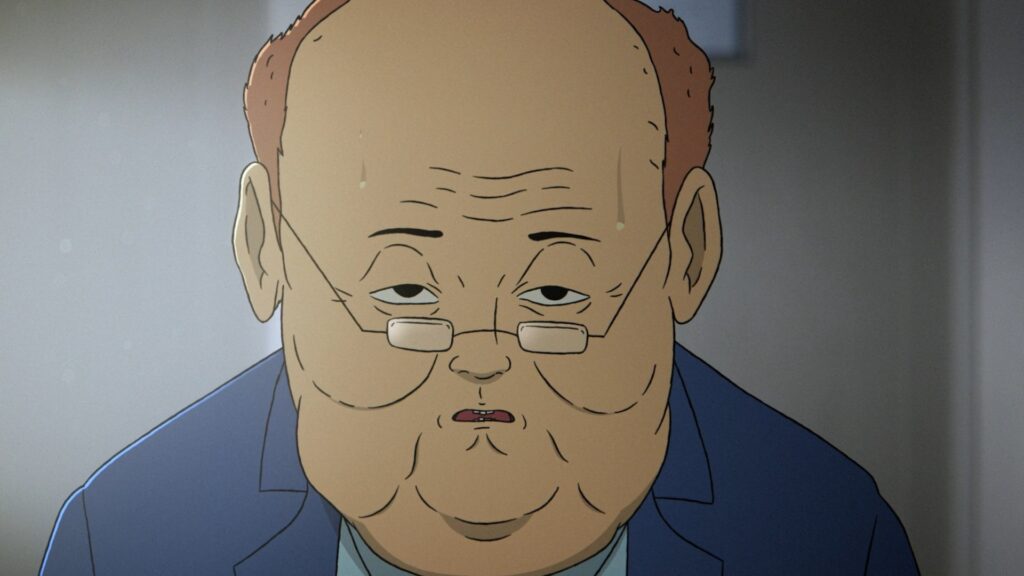
Behind Jonas Backstein, the soft‑spoken but ruthless Reutical board member, is Danny Huston. He is not just a familiar TV antagonist from Yellowstone. He is also the latest working member of one of Hollywood’s most documented dynasties.
And that lineage matters to how Jonas sounds, and how he lands.
The Huston “Family Business,” From Walter to Danny
The Huston name carries nearly a century of film history. It also carries a specific record.
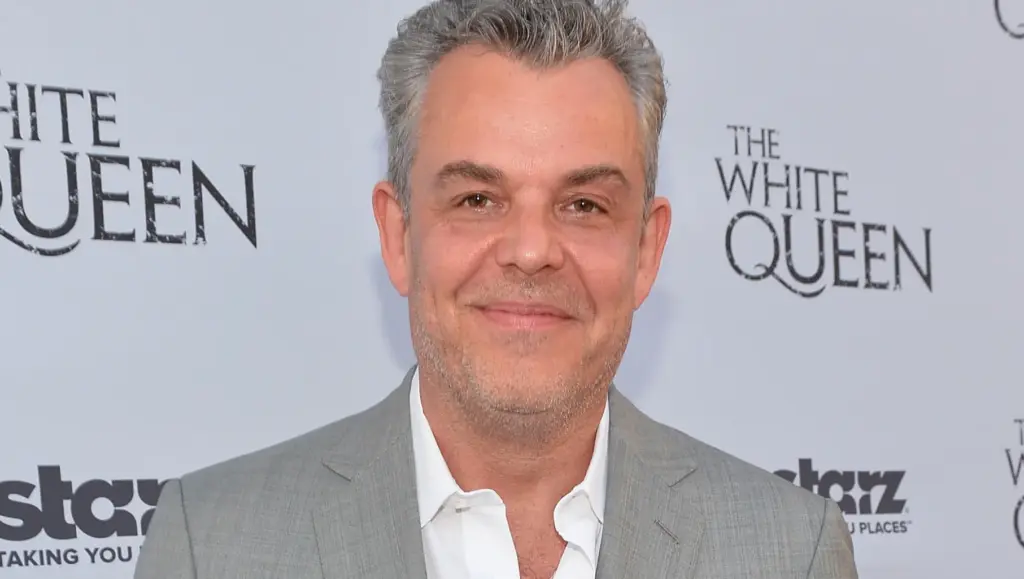
Walter Huston won an Academy Award for Best Supporting Actor for The Treasure of the Sierra Madre in 1948. His son, writer‑director John Huston, adapted and directed that film and won Oscars for both direction and screenplay. Decades later, John directed his daughter Anjelica Huston in Prizzi’s Honor, which earned her the Oscar for Best Supporting Actress in 1985.
Film historians often single out that trio. According to John Huston’s biography, the Hustons became the first family with three generations of Academy Award winners, all tied together by one director.
John Huston’s own career sets the tone. His key works include The Maltese Falcon (1941), The African Queen (1951), The Asphalt Jungle (1950), and Key Largo (1948). The Maltese Falcon reportedly cost about $375,000 to make and grossed about $1.8 million, later landing in the National Film Registry as a landmark of American noir. Over his career, John earned 15 Oscar nominations and two wins, along with an AFI Life Achievement Award in 1983.
Anjelica Huston built a separate, modern reputation. She has three Oscar nominations, one win for Prizzi’s Honor, and dozens of other awards across film and television. Profiles in 2025 still frame her career alongside her father’s, often stressing how demanding he was as a director and parent.
Danny Huston grew up in that context. Born May 14, 1962, in Rome to John Huston and actress Zoe Sallis, he is Anjelica’s half‑brother and Walter’s grandson. He later studied at London Film School and now holds both U.S. and U.K. citizenship.
Asked about this lineage, Danny has often avoided mystique. In one interview tied to a Museum of Modern Art retrospective, “The Huston Family: 75 Years on Film,” he simply called it the family trade. Some families, he said, are generations of carpenters or farmers. His family’s “business” is movies.
That “business” now extends into Adult Swim animation.
Danny Huston’s Road to Prestige Villainy
Long before Jonas Backstein or Dan Jenkins, Danny Huston worked steadily as both actor and director. His breakout as a leading performer came with Ivans Xtc in 2000, which earned him an Independent Spirit Award nomination for Best Male Lead.

From there, his film credits stack up quickly. He appears in 21 Grams (2003), Birth (2004), The Aviator (2004), The Constant Gardener (2005), Marie Antoinette (2006), Children of Men (2006), The Kingdom (2007), 30 Days of Night (2007), Robin Hood (2010), Hitchcock (2012), Big Eyes (2014), Wonder Woman (2017), Game Night (2018), Stan & Ollie (2018), and Angel Has Fallen (2019).
Television work followed a similar pattern. He played Miami mobster Ben “The Butcher” Diamond in Magic City, the Axeman and Massimo Dolcefino in American Horror Story, and power lawyer Jamie Laird in Succession’s second season.
The thread running through many of these roles is menace. Huston often plays antagonists, but he talks about them in careful terms. In a Magic City interview with Collider, he said many villains he plays “don’t really know that they’re villains.” In his view, they do not see themselves as evil. They justify their behavior, sometimes even to themselves.
That attitude shows up again in later comments. Speaking about the pandemic drama We Are Gathered Here Today, he said he is drawn to projects with “social consciousness and meaning within the context of the world that we are inhabiting now.” His bad men, in other words, usually connect to a recognizable system: money, power, disease, or land.
That combination of moral ambiguity and system‑level stakes set up his Yellowstone role. It also laid a foundation for Jonas.
Dan Jenkins on Yellowstone: Corporate Villain with a “Moral Core”
When Yellowstone premiered on Paramount Network on June 20, 2018, Danny Huston arrived in the pilot as Dan Jenkins. The show, which ran for five seasons through December 15, 2024, centers on conflicts over land between the Yellowstone Dutton Ranch, local tribes, national parks, and developers.
Jenkins represents the last group. He is a wealthy California‑based real estate developer tied to a firm called Paradise Valley. Character guides describe him as the man behind a plan for a casino, condos, and luxury resort near or on the Dutton ranch.
Early reviews leaned into his symbolic role. Slant Magazine called him the “purest villain” of the first season and a caricature of a real‑estate mogul aiming to “inundate Montana with condos and artisanal ice‑cream shops.” In that reading, he stands in for gentrifying capital, parachuting into rural land with money and a blueprint.
However, Huston resisted a flat reading. In later interviews, he referred to Jenkins as an outsider and even as a kind of “eco‑friendly land developer.” Jenkins, in his own mind, wants to share the landscape with people who otherwise would never see it. According to coverage summarized by Looper, Huston argued that Jenkins still has a “moral core” and does not take pleasure in causing harm.
The show itself eventually bends in that direction. Although he starts as Season 1’s main antagonist, Jenkins later teams up with John Dutton and tribal leader Thomas Rainwater when a more dangerous threat arrives. Analysts at CBR noted that, compared with later villains, he seems “rather tame,” even like someone the Duttons can bargain with.
His end remains brutal. In the Season 2 finale, “Sins of the Father,” three hitmen sent by the Beck brothers attack his home. Jenkins kills two but is fatally shot by the third. His last words, according to episode breakdowns, are: “I have every right to be here. I have every right. I have a right. This is America.”
That line encapsulates Huston’s version of corporate villainy. Jenkins sees himself as a legitimate player. He believes in markets, land deals, and a particular idea of American entitlement.
Those themes echo, in a darker register, in Jonas Backstein.
Common Side Effects and the Rise of Jonas Backstein
Common Side Effects entered a different corner of television. Created by Joseph Bennett and Steve Hely, it screened its pilot at Annecy in June 2024, then at San Diego Comic‑Con in July. The full series debuted on Adult Swim on February 2, 2025, and later ran on Toonami from March 1 to May 3. Adult Swim renewed it for a second season on March 28, 2025.
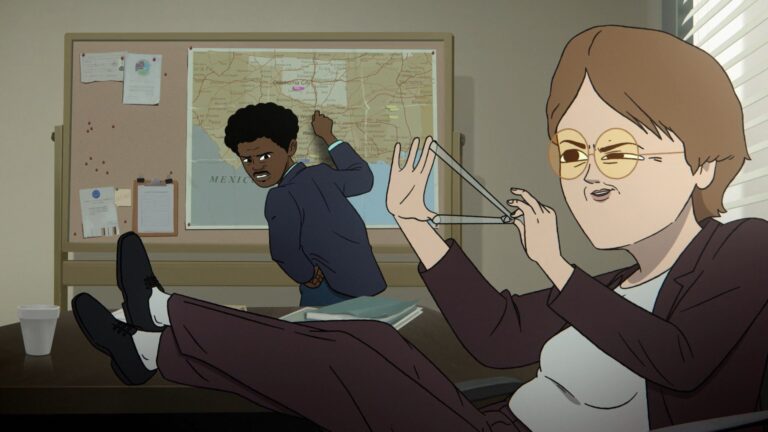
The premise is simple to describe and harder to digest. Mycologist Marshall Cuso discovers the “Blue Angel Mushroom,” a fungus that appears to cure all illness. He and his former high‑school lab partner Frances Applewhite try to develop it. In response, a pharmaceutical giant called Reutical, the DEA, and various government and corporate figures move quickly to bury the discovery.
Critics framed the show as a pharma‑satire and conspiracy thriller about American healthcare. Paste Magazine called it “a breath of fresh air” for adult animation and an unflinching look at “the catastrophe that is America’s healthcare system.” Review aggregators backed that up. On Rotten Tomatoes, Season 1 holds a 100% critic score from 27 reviews and a 91% audience score. Metacritic lists an 80/100 rating, labeled “Generally Favorable.”
Within that world, Jonas Backstein sits at the top of the food chain.
According to the show’s documentation and fan resources, Jonas is a powerful Swiss financier and a member of Reutical’s board. He maintains strong insider ties to the U.S. federal government. His mission is straightforward and chilling: destroy the Blue Angel mushrooms, silence Marshall Cuso, and protect Reutical’s grip on the medical industry.
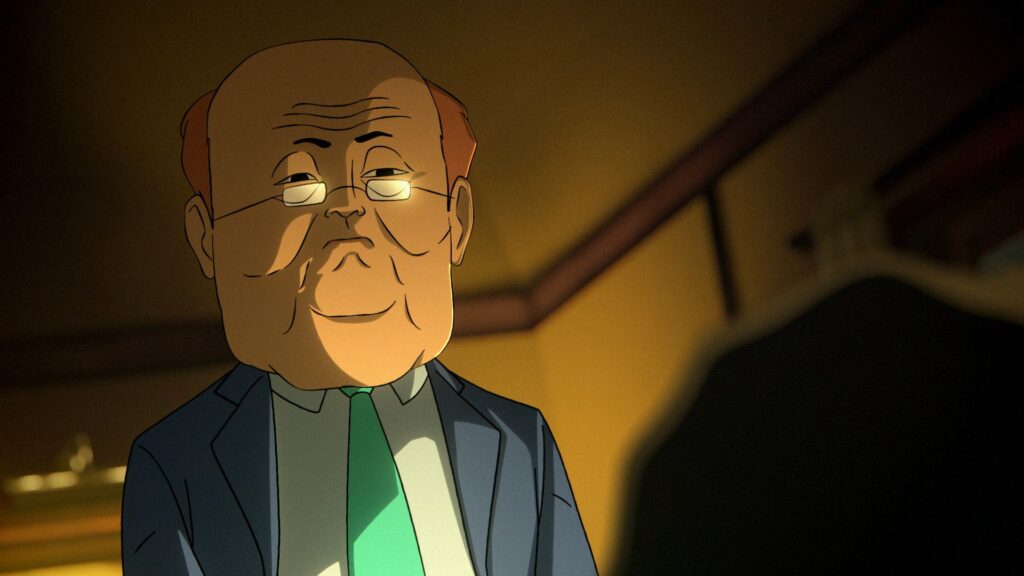
He is referred to as the series’ “ruthless main antagonist” and, in some corners of fandom, as “Jonas the Wolf,” a nickname he reportedly despises.
Jonas uses methods that Jenkins rarely touches. Character breakdowns list assassination by proxy, industrial pollution, systematic cover‑ups, and even a private hit squad tasked with killing Marshall and erasing evidence. Where Jenkins filed lawsuits and leveraged local officials, Jonas orders people killed and cities poisoned.
His philosophy is equally stark. In one often‑quoted line, he tells a subordinate, “There is no good or bad news. Only ambiguity.” Later, he delivers a longer monologue arguing that curing everyone would destroy the existing order. He claims criminal cartels would weaponize a miracle cure. With no permanent injury, every fight becomes lethal. Wars, he warns, would grow “unimaginably ferocious.” In his view, destroying the mushroom becomes a kind of dark utilitarianism.
Even his downfall is tailored. Late in the season, Jonas learns he has terminal cancer. In the finale, he takes seven Blue Angel mushrooms in a desperate attempt to save himself. Instead of a clean cure, he overdoses, collapses, and slips into a coma.
According to analysis on CommonSideEffects.tv, he becomes trapped in a recurring hallucination. Inside it, he watches a tumor in his body grow and shrink in an endless loop. The site describes this as deliberate “payback,” a metaphoric punishment that locks a man who profited from illness into an eternal cycle of disease.
On the page, Jonas is ruthless and almost entirely amoral. On screen, that amorality needs a voice.
How Danny Huston’s Yellowstone Villainy Flows into Jonas Backstein
Casting Danny Huston as Jonas Backstein brought an existing persona with it. By 2025, viewers already knew him as Dan Jenkins, Ben “The Butcher” Diamond, General Ludendorff in Wonder Woman, and several other refined antagonists.
In Common Side Effects, he shifts that presence into pure voice. Official cast lists from Rotten Tomatoes and Toonami confirm that he plays Jonas in Season 1. Paste Magazine’s renewal story goes further, noting that Huston “adopts a Swiss accent as the shadowy archvillain (and pharmaceutical board member) Jonas Backstein.”
On this site, writers have leaned into that performance. A feature on Season 1’s best voice work describes him as bringing “a little cinematic firepower to Jonas Backstein, the puppetmaster in the Reutical boardroom shadows.” His voice, the piece argues, conveys “villainy with undeniable weight,” using “quiet, menacing authority” so that “just a whisper of his velvet growl makes every business meeting feel like a battle for the soul.”
Another article here calls him “the closest thing to a proper Bond villain in the show.” It urges viewers to rewatch Episodes 3, 7, and the finale to hear how his “baritone” turns every line into “a chess move.”
Those lines echo the approach Huston outlined years earlier. His villains, he said, do not think of themselves as villains. They tend to be men with ideology and justification. Jenkins believes he is modernizing Montana. Ben Diamond believes he is surviving in his brutal corner of Miami. Jonas believes he is preserving a grim stability.
At the same time, Jonas represents an evolution. Huston has publicly argued that Jenkins retained a “moral core.” Jenkins occasionally feels sorry for the Duttons and does not relish their pain. Jonas, by contrast, is described in fan and trope sites as the “most amoral” figure in Common Side Effects, a man who authorizes murders with almost no visible emotion.
The parallels still stand. Both Jenkins and Jonas are wealthy outsiders. Both try to remake existing systems, whether Western land or American healthcare. Both rely on money, legal or political leverage, and hired muscle more than physical intimidation.
Huston plays that overlap. The urbane developer in a tailored coat becomes, in animation, a Swiss financier in a sound booth. The manner is similar. The moral shading is not.
Why This Casting Matters for Common Side Effects
Adult animation has spent the last decade pulling more live‑action talent into the booth. BoJack Horseman, Big Mouth, and Invincible all rely on familiar film and TV faces. Common Side Effects follows that pattern but uses it precisely.
The show’s tone depends on balancing surreal mushroom trips with very grounded fears about insurance, monopolies, and access to care. Its main villain therefore cannot feel like a cartoon. He must sound like someone who might actually sit on a real pharma board.
That is where the Huston legacy and Danny’s own track record click into place.
Viewers may not consciously track the family tree, from Walter’s Oscar in 1948 to Anjelica’s in 1985. They probably do recognize the man who once glared across Montana at Kevin Costner’s John Dutton. When that same voice, now with a Swiss accent, calmly explains why curing cancer might be a disaster, it lands differently.
Huston’s presence also arrives at a moment when Common Side Effects has started to punch above its weight. The show holds a rare 100% critic score on Rotten Tomatoes, along with a 91% audience rating. A television analytics site ranked it among the top three Adult Swim series by online engagement in November 2025, with a Reddit community nearing 20,000 members.
In that environment, casting a member of a three‑generation Oscar family as your main villain is not just trivia. It is part of the series’ strategy to give an animated pharma conspiracy the same gravity as a prestige drama.
What Happens Next
Adult Swim’s renewal of Common Side Effects for a second season, announced March 28, 2025, guarantees that the fallout from Jonas’s coma will continue to shape the story. For now, Jonas remains trapped in his looping hallucination, watching a tumor rise and fall inside his own body.
The details of Season 2 are still under wraps, and the show has not publicly confirmed which cast members will return. What is clear is that Jonas, even off the board, has left a large shadow over Reutical, Marshall, and the Blue Angel.
For CommonSideEffects.tv, that makes Danny Huston’s performance a continuing point of interest. His work as Jonas links Adult Swim’s neon conspiracy to decades of Hollywood history, stretching from Walter Huston’s gravelly presence in The Treasure of the Sierra Madre to Anjelica Huston’s Oscar‑winning turn in Prizzi’s Honor, and on to Yellowstone’s Dan Jenkins.
The Huston dynasty has played prospectors, gangsters, heiresses, generals, and mobsters. In Common Side Effects, it now adds something different: a Swiss pharma kingpin whose voice carries almost a century of film weight into one animated boardroom.