
Reutical Pharmaceuticals Explained: Inside the Big Pharma Villain of Common Side Effects
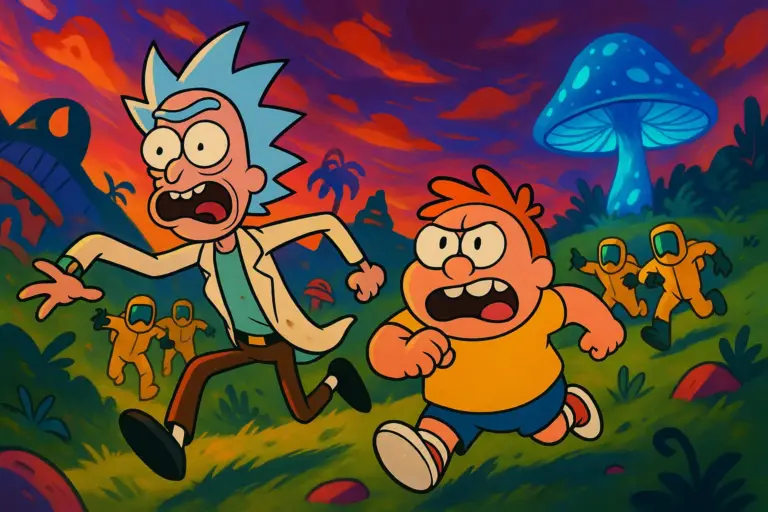
In a show stuffed with glowing fungi, federal raids, and hallucinated pigeons, the most familiar threat is not the mushroom. It is a company logo.
Reutical Pharmaceuticals sits at the center of Common Side Effects’ conspiracy web. It bankrolls the pollution. It spins the science. It leans on the government when things go wrong. Yet the series also shows Reutical saving lives and struggling with its own messes, not just twirling a cartoon mustache.
Here is what we concretely know about Reutical as of late November 2025, how it functions inside the story, and how closely it tracks real‑world Big Pharma behavior.
The Corporate Villain at the Heart of Common Side Effects
To understand Reutical, it helps to place it inside the show’s basic frame.
Common Side Effects premiered on Adult Swim on February 2, 2025, in the 11:30 p.m. slot. Season 1 ran weekly through March 30, 2025. The series comes from Joe Bennett and Steve Hely, with Mike Judge and Greg Daniels among the executive producers. It quickly picked up strong reviews, an 80/100 Metacritic score, and a Primetime Emmy nomination for the episode “Cliff’s Edge.”
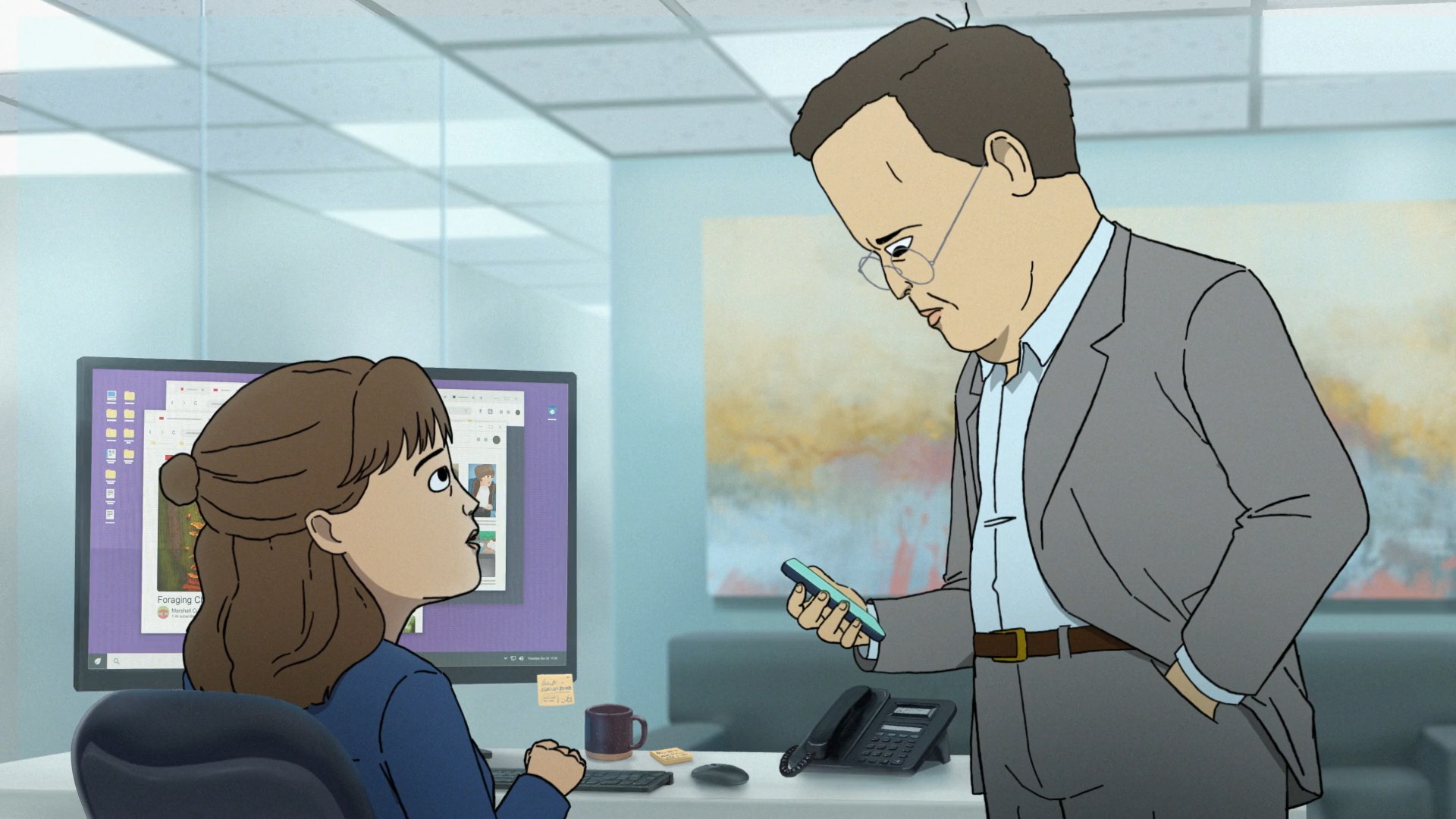
The premise is straightforward to describe and much messier to live in. Two former high‑school lab partners, Marshall Cuso and Frances Applewhite, stumble into a conspiracy linking a powerful pharmaceutical company, Reutical Pharmaceuticals, and U.S. government agencies. The secret they fight over is the Blue Angel mushroom, a glowing fungus that appears to cure almost any illness.
Reutical is not a background detail. It drives the action from the pilot onward. The company’s decisions set Marshall’s story in motion and shape almost every institution he runs into afterward.
What Reutical Looks Like in the Show’s World
On paper, Reutical is one of the largest pharmaceutical companies in the Common Side Effects universe. Recaps and character guides describe it as a multinational firm with global facilities, investor conferences, and the familiar corporate shine.
Underneath that shine, Season 1 establishes three important facts:
1. The company is already in crisis.
When viewers first meet Reutical, it is battling major lawsuits and a public relations disaster over side effects from a failed arthritis drug. The company’s profits are sliding, and executives fear shareholder backlash.
2. It has a dirty environmental record.
Reutical operates a facility in Peru that has polluted the surrounding ecosystem with pharmaceutical waste. During an early investor conference, Marshall publicly confronts the company about the devastated landscape near that plant.
3. It is deeply entangled with the U.S. government.
Several characters, including Jonas Backstein and Cecily, move between Reutical and federal agencies. They use those connections to protect corporate interests and to target Marshall.
So Reutical enters the story not as a shiny success story, but as a cornered giant looking for its next lifeline.
The People Behind the Logo: Kruger, Backstein, Kiki, and Cecily
The show gives Reutical a face, or rather several of them, instead of leaving it as a nameless monolith.
Rick Kruger: Anxious CEO in Over His Head
Rick Kruger is Reutical’s CEO or president, depending on the source, and the main corporate figure viewers follow. Mike Judge voices him, which already signals a certain satire.
Kruger presides over a company under siege. He frets about “a barrage of lawsuits” tied to that failed arthritis treatment and worries constantly about losing his job. Reviews and essays describe him as anxious, somewhat incompetent, and occasionally sympathetic, especially in his scenes with Frances.
He is not a master strategist. He is a middle manager who accidentally sits at the top of the org chart. Kruger spends too much time playing farming‑simulator games during work hours, even as he green‑lights aggressive moves around Blue Angel and, later, Sparkl.
Jonas Backstein: Boardroom Power Broker and Primary Antagonist
If Kruger is a nervous public face, Jonas “the Wolf” Backstein is the power behind the throne.
Jonas is a Swiss financier and Reutical board member. Several write‑ups call him the most influential businessman connected to the company and treat him as the series’ main human antagonist. He has deep ties to the U.S. federal government and uses those contacts to suppress information about the Blue Angel mushroom and to hunt Marshall.
Over the course of Season 1, Jonas:
- Hires assassins and deploys surveillance technology to track people linked to Blue Angel.
- Works with federal agents to raid Marshall’s farm.
- Then, in a twist, is diagnosed with terminal lung cancer, which sends him chasing the very mushroom he tried to destroy.
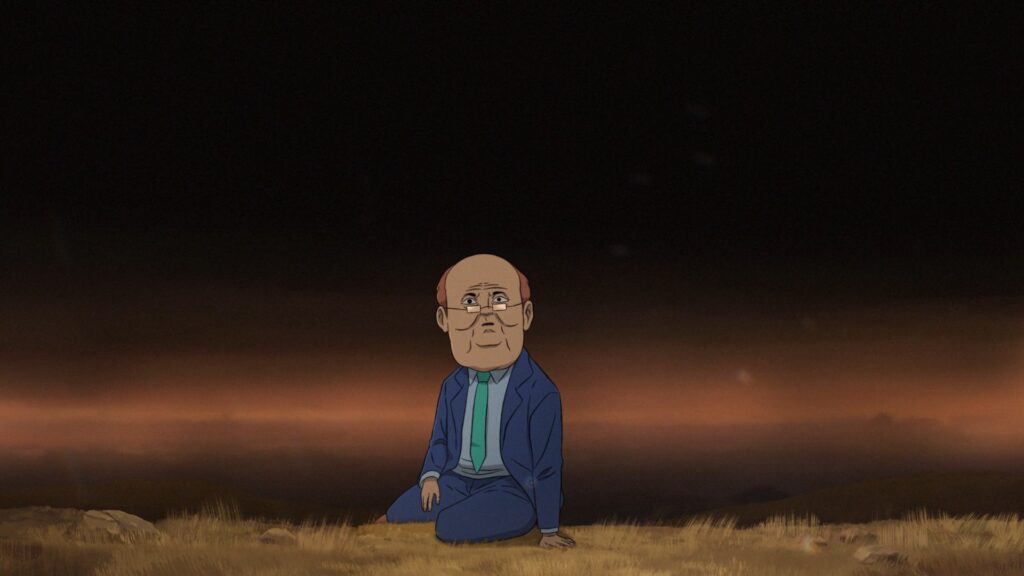
In the Season 1 finale, “Raid,” Jonas steals a large dose of Blue Angel and overdoses. He falls into a grotesque hallucination loop and ends up comatose as the FBI raid unfolds around him. Commentators often describe that fate as a kind of cosmic payback.
Kiki: The Scientist Who Complicates the Picture
Reutical is not staffed only by villains. Kiki, a younger researcher at the company, regularly voices the pro‑pharma side of the argument.
In one exchange that recaps frequently quote, she points to an in‑universe Reutical heart drug, Lavinol. She notes that Lavinol reduced global deaths from heart disease by 80,000 and that Reutical delivered millions of doses worldwide within months.
Her point is blunt: companies like Reutical also save lives at scale. This line matters because it complicates the narrative. The show does not present Reutical as pure evil; instead, it shows how that life‑saving power sits next to reckless decisions and profit‑driven harm.
Cecily: The Bridge Between Company and State
Cecily begins as Jonas’s assistant and later becomes a senior figure at the National Security Agency. Character wikis describe her as either Director or Deputy Director there.
She uses that role to push federal agencies into actions that benefit Reutical. She helps aim the DEA and FBI at Marshall and his allies. With Cecily, the show makes a recurring point clear: state power and corporate power often move in tandem, not in opposition.
Reutical and the Birth of the Blue Angel Mushroom
The Blue Angel mushroom is the series’ central MacGuffin, but it is also one of Reutical’s biggest unintentional creations.
Discovery and Early Demonstrations
Marshall discovers Blue Angel in the Peruvian jungle, near Reutical’s polluting facility. The fungus glows blue and appears to heal almost any injury or illness, often instantly. Early examples are dramatic:
- Marshall revives a pigeon on stage at a Reutical investor event after snapping its neck.
- The mushroom later heals Marshall himself after a near‑fatal plane crash in Peru.
Those scenes establish the stakes quickly. If Blue Angel is real and scalable, existing pharmaceutical lines look obsolete.
Pollution as Origin Story
By Episode 3, titled “Hildy,” the show ties Reutical directly to the mushroom’s origins. Marshall learns that Blue Angel adapted to survive in an environment saturated with Reutical’s pharmaceutical waste.
In other words, Reutical did not only stumble upon a rival product. Its own pollution helped create a fungus that could undermine its entire business model.
That twist matters for how viewers read the company. Reutical is not just suppressing a miracle cure for profit. It is also dealing with the consequences of its own environmental negligence.
Failed Attempts to Reproduce and Control
In Episode 4, “Dumpsite,” Marshall buys land near a U.S. chemical waste site, hoping to recreate Blue Angel’s conditions. His early efforts fail. The fungus does not simply appear because chemicals are present.
Meanwhile, Reutical follows its own path. In “Cliff’s Edge,” the company runs a secret laboratory where scientists attempt to develop a synthetic version of the mushroom’s effects. Those experiments go badly. Subjects show symptoms “like schizophrenia and other ailments,” underlining the danger of cutting corners.
By the time of the Season 1 finale, several threads converge:
- Marshall and Hildy’s informal mushroom farm gives away Blue Angel to sick people.
- Jonas and Cecily push federal agents toward a violent raid.
- Reutical stares at both a business opportunity and a regulatory nightmare.
The Season 1 Finale: Raid, Byproducts, and a New Product
“Raid,” which aired March 30, 2025, closes Season 1 with a chain of events that permanently reshapes Reutical’s role.
During the DEA and FBI assault on the farm:
- Agents destroy most of the stored mushroom.
- An agent named Copano is critically wounded, then revived with Blue Angel, confirming again that the fungus works.
- Jonas overdoses, as noted earlier, and collapses into a nightmarish hallucination spiral.
In the chaos, Hildy and accomplices dump Blue Angel tincture into a city water tower. That final act quietly sets up a possible mass‑exposure storyline for Season 2.
For Reutical, the key moment comes afterward. Rick Kruger, picking through the ruins of earlier trials, identifies a byproduct compound linked to Blue Angel. Instead of pushing for a regulated drug, he repackages that compound as a food additive.
He calls it Sparkl.
Sparkl: Reutical’s Mushroom Additive, Explained
Sparkl is the next big Reutical product, but as of November 2025, it exists only in the world built around Season 1’s ending and public previews of Season 2.
Here is what is established so far:
- Origin:
Rick discovers a byproduct of Blue Angel in Reutical’s labs after the raid and isolates it for development.
- Form and marketing:
Sparkl is presented as a “mushroom‑based food additive,” not a prescription drug. Company materials inside the show plan to mix it into everyday foods: chips, breakfast cereal, office snacks, and even school lunches.
- Sales pitch:
Reutical frames Sparkl as a way to deliver “Blue Angel‑style benefits” without strange jungle trips or illicit farm visits. People do not have to eat raw glowing mushrooms. They just grab a snack.
Official explainers and previews stress that Sparkl likely carries similar mental and perceptual risks as the original fungus. Users may face hallucinations, mood swings, or sleep disturbances. Early Season 2 teasers mention social‑media posts in‑universe about people “seeing things” after Sparkl‑laced foods and children who cannot sleep after certain snacks.
It is important to be precise: as of late November 2025, none of those scenes have aired. They come from official site write‑ups and promotional interviews. The only fully canonical facts are that Rick identifies a Blue Angel byproduct and markets it as a mass‑market additive called Sparkl.
What the Creators Say: The System as the Real Villain
Reutical is an obvious antagonist, but the show’s creators are clear about their wider target.
In a January 31, 2025 interview with The Verge, Joe Bennett and Steve Hely said the “true villain” of Common Side Effects is the American healthcare system itself. They describe it as corrupt, profit‑driven, and dehumanizing. Individual characters, from Marshall to Rick to DEA agents, operate inside that system rather than outside it.
They also emphasize that they spoke with people in pharma, mycology, biology, law, and retired DEA personnel while developing the show. That research helped them root the story in realistic incentives and processes, even when the fungus at the center remains fantastical.
An essay on the official site makes a related argument. It notes that the show skewers several features of modern healthcare:
- High costs and medical debt.
- A culture of over‑medication and pill‑first solutions.
- The enormous power of Big Pharma and its willingness to protect profit.
That framing aligns with how Reutical appears on screen. The company does harmful things and covers them up. It also manufactures drugs that save tens of thousands of lives. Characters inside Reutical often believe they are doing necessary work, even while viewers see the damage.
Real‑World Echoes: Purdue, Insulin, and Industrial Waste
The show never names a real company as Reutical’s model. However, its behavior draws on several well‑documented industry stories.
Opioids and Purdue Pharma
Many viewers connect Reutical’s pattern of downplaying side effects and rushing products to market with the opioid crisis.
Purdue Pharma aggressively sold OxyContin starting in the late 1990s. Federal data and lawsuits link that campaign to the deaths of hundreds of thousands of Americans from opioid overdoses since 2000. In 2020, Purdue agreed to plead guilty to three federal criminal charges, tied to kickback schemes and misleading marketing, in a settlement valued at more than $8 billion.
Litigation continued. In January 2025, Purdue and the Sackler family reached a new $7.4 billion deal to resolve thousands of lawsuits. The Sacklers will pay up to $6.5 billion over 15 years and give up control of the company.
Reutical’s fictional arthritis drug scandal and its hurried rollout of Sparkl echo that history: heavy marketing, underplayed risks, and massive downstream harm. A May 2025 case in which a former McKinsey partner received a prison sentence for destroying Purdue‑related records only underlines how many layers of the real industry were involved in maximizing sales.
Insulin Pricing and Everyday Exploitation
Reutical is also big enough to resemble the companies that dominate chronic‑care markets like insulin.
One widely cited example involves Humalog insulin in the United States. A 10 mL vial cost about $21 in 1996 and roughly $275 in 2017, a price jump of around 1,195 percent before recent reforms. Analysts have estimated production costs at only a few dollars per vial, highlighting the gap between manufacturing and retail price.
In Common Side Effects, Kiki’s Lavinol example shows how a company like Reutical can deploy millions of doses worldwide, save an estimated 80,000 lives, and still operate within a pricing and access structure that leaves many patients struggling. The show does not spell out those price gaps, but real‑world figures provide context for why audiences read Reutical as more than a simple cartoon.
Environmental Damage and Accidental Discoveries
Finally, the Blue Angel origin story tracks closely with real concerns about industrial pollution.
Marshall learns that Blue Angel evolved as a response to pharmaceutical waste from Reutical’s Peruvian plant. That mirrors real anxieties about how mining, deforestation, and chemical dumping in South American forests may destroy unknown fungi before science ever documents them.
A 2025 Salon feature on rare Ecuadorian mushrooms, for example, links corporate projects in Andean cloud forests to the loss of biodiversity and potential medical discoveries. Common Side Effects flips that script slightly: here, the pollution creates a novel organism rather than erasing one, but the underlying criticism of extractive industry is similar.
Fan Theories: Who Is Reutical Really, and Is It Necessary?
Outside the show, viewers have turned Reutical into a guessing game and a debate club.
Commentary pieces describe threads where fans match Rick Kruger’s lines with quotes from real pharmaceutical executives, often noting how interchangeable they sound. Some fans argue that Reutical is clearly modeled on Purdue. Others see bits of multiple firms, from insulin makers to opioid manufacturers to wellness brands selling barely regulated supplements.
Creators have not endorsed any one comparison. Available interviews suggest that Reutical is a composite, built from many scandals and systemic incentives rather than a single corporate biography.
Another ongoing debate focuses on Kiki’s Lavinol comment. Some viewers latch onto that 80,000 lives‑saved figure to argue that companies like Reutical are “necessary evils” in a broken but technologically advanced system. Others argue that those successes do not excuse the deliberate cover‑ups and experiments seen elsewhere in the show.
Finally, Sparkl has kicked off its own wave of speculation. Because it is a food additive with quasi‑therapeutic promises, fans read it as:
- A metaphor for heavily marketed “miracle” drugs like OxyContin.
- A jab at energy drinks and functional snacks with unproven health claims.
- A warning about how quickly a company can rebrand harmful substances as lifestyle products.
These readings remain interpretations for now. They are grounded in Season 1 events and in official previews, but Season 2 will determine how many of them land.
What Happens Next
As of November 2025, we know three firm things about Reutical’s future on screen.
Adult Swim renewed Common Side Effects for a second season on March 28, 2025. Season 1 ended with Reutical bloodied but not broken, Jonas in a coma, the farm destroyed, and Sparkl on the launchpad. Blue Angel extract has entered a city’s water supply, almost certainly without regulators’ knowledge.
Going forward, viewers can expect:
- Reutical trying to stabilize its business around Sparkl while managing legal and regulatory fallout.
- Government agencies wrestling with the consequences of their partnership with the company.
- More tension between Reutical’s genuine medical contributions and the damage it causes.
The show’s creators keep stressing that the healthcare system itself is their core antagonist. Reutical is simply the most recognizable piece of that system, wearing a logo, running conferences, and cutting deals.
That is what makes it unsettling. Even when the mushrooms glow, the company feels familiar.